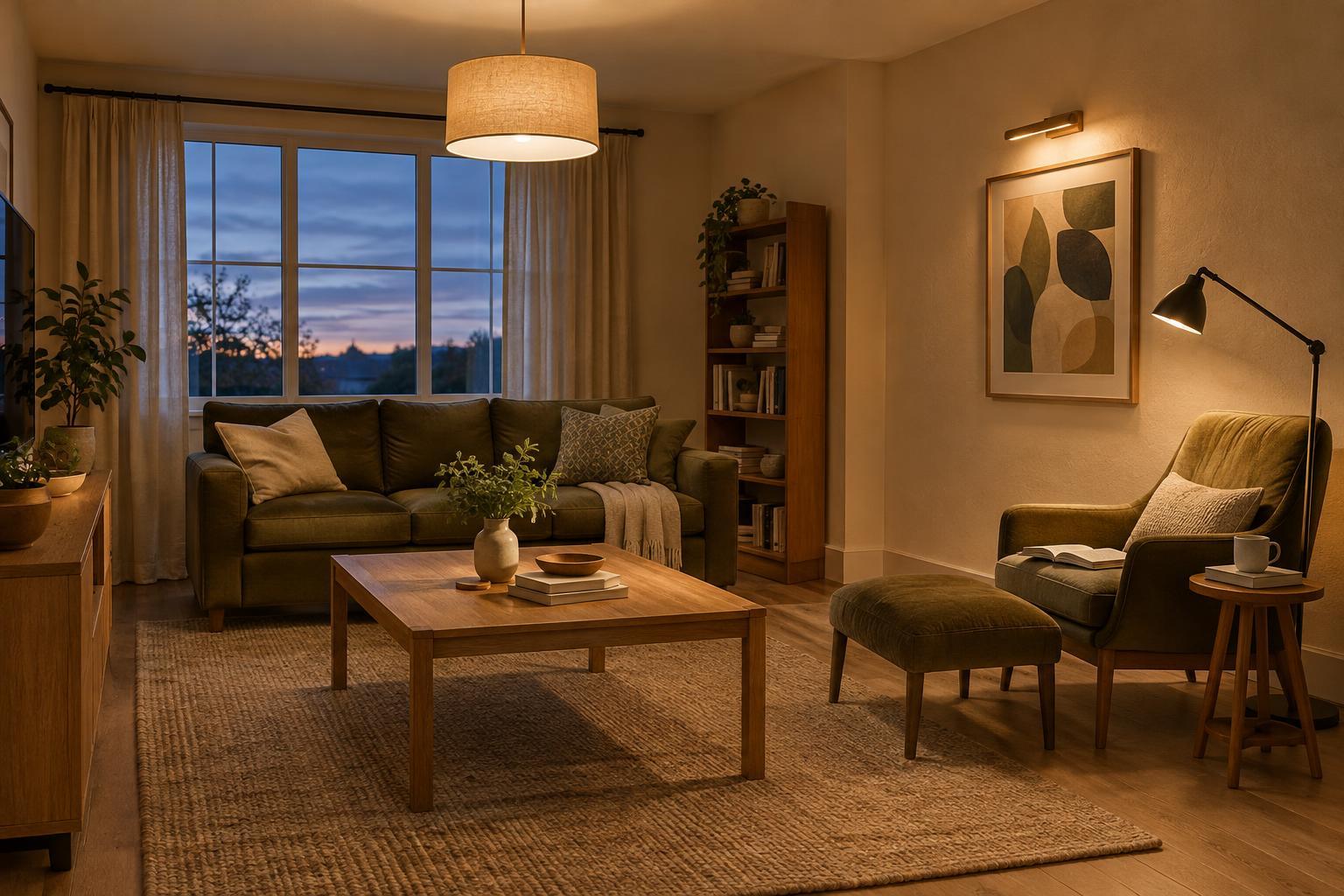
Start with what you do in the room
Lighting layers are different kinds of light working together. Ambient light helps you move around and see the room as a whole. Task light supports a specific activity, such as reading or chopping vegetables. Accent light draws attention to a feature or adds a softer glow. You do not need a fixture for every corner; the goal is to give the room enough light for its uses without making every light do the same job.
Before shopping, note where you sit, work, prepare food and walk after dark. Then look at the light you already have. A ceiling fixture may illuminate the floor but leave a desk in shadow. A bright desk lamp may make reading easy while the rest of the room feels dim. These observations tell you which layer is missing and help you avoid buying a lamp simply because an empty spot looks as though it needs one.
Build a comfortable ambient base
Ambient lighting is the general light that makes a room usable. It can come from a ceiling fixture, wall lights or several lamps placed around the room. One overhead light is convenient, but it may cast harsh shadows or leave edges dark. In a living room, a floor lamp near one end and a table lamp on the other can spread light more evenly, whether or not you use the ceiling fixture.
Think about how the light reaches your eyes. A shade or diffuser can soften a visible bulb, while a lamp aimed at a pale wall or ceiling can provide indirect light. If a room feels glaring, try a lower-output bulb or a dimmer where the fixture and bulb are compatible. Choose bulbs with a similar color appearance for lights you often use together, so the room does not shift noticeably from warm to cool as you turn lamps on.
Put task light where the work happens
Task lighting should make an activity easier without forcing you to light the entire room at full strength. A reading lamp belongs close enough to illuminate the page. A desk lamp should light your work surface without shining directly into your eyes or reflecting off a screen. In a kitchen, light at the counter is often more useful for food preparation than a bright fixture in the center of the ceiling.
Placement matters as much as brightness. If your hand or body blocks the light, move the lamp to the side or use a fixture that lights the work area from another angle. A clip-on lamp can serve a small desk or shelf, and a plug-in lamp can help a renter avoid permanent changes. Keep cords out of walking paths and follow each fixture’s instructions, especially near water or heat.
Use accent light with a purpose
Accent lighting adds depth by creating a point of interest. It might illuminate artwork, brighten a bookcase or wash a textured wall with light. It can also be modest: a small lamp on a sideboard may make a dining area feel welcoming when the main lights are off. The effect works best when you can tell what the light is highlighting, rather than seeing only a bare bulb or a sharp patch of glare.
Start with one feature you enjoy looking at. Position a light so it catches that feature without shining into the usual seating positions. You can experiment with a movable lamp before committing to a mounted fixture. Accent lighting is optional; if a room is short on usable light, solve the ambient and task needs first.
Test the layers together
Try the room at the times you use it. For a quiet evening, you might use a floor lamp for general light and a reading lamp beside the sofa. For cleaning, you may want the ceiling light as well. In a bedroom, a soft general light can help you get dressed, while bedside lamps give each person focused light without illuminating the whole room. Separate switches make these combinations easier to control.
You can build the plan gradually. Move existing lamps before buying new ones, and check whether a different shade or compatible bulb solves the problem. If you add a fixture, consider how its scale, finish and light direction fit the room. Plug-in options offer flexibility; hardwired changes may require a qualified electrician. A successful lighting plan is not the brightest one. It is the one that lets you choose the light you need for the moment.


