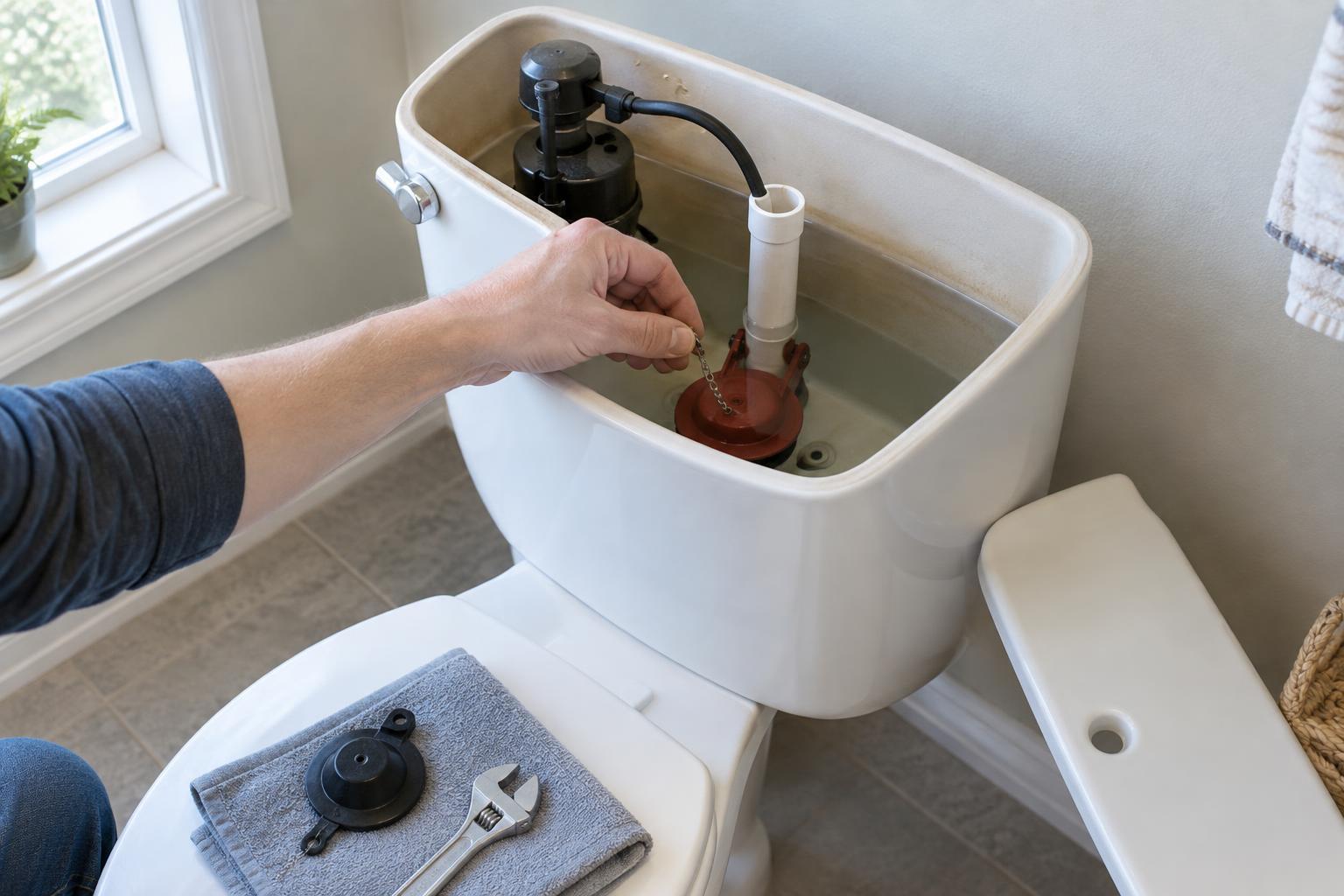
Start by finding where the water is going
A running toilet may make a constant trickling sound, refill at intervals when no one has flushed, or send a visible stream into the bowl. These symptoms usually point to one of two problems inside the tank: water is escaping past the flush valve, or the fill valve is allowing too much water in. Finding which is happening can save you from replacing parts that still work.
Lift the tank lid carefully and set it on a towel where it cannot fall. Watch the water while the toilet is idle. If it rises to the top of the overflow tube and spills into it, check the water-level setting or fill valve. If the level stays below the top of that tube but the toilet continues to refill, water may be leaking through the flapper at the bottom of the tank. A few drops of food coloring in the tank can help confirm this: without flushing, look for color appearing in the bowl. Skip this test if tank cleaners or other chemicals are present.
Before putting your hands in the tank or changing a part, close the toilet’s supply valve, usually found near the wall or floor behind the bowl. Turn it gently clockwise, then flush to lower the tank water level. If the valve is stuck, do not force it. Keep a towel nearby for drips, and wash your hands after working on the toilet.
Check the flapper and its chain
The flapper is the flexible seal that lifts when you flush and settles over the opening at the bottom of the tank. If it is warped, stiff or coated with buildup, it may not seal fully. With the water off, inspect its edge and the surface it rests on. Wipe away loose residue with a soft cloth; avoid scraping the sealing surface. If the flapper looks damaged or still leaks after cleaning, replace it with one that matches the toilet’s flush-valve size and attachment style.
Check the chain between the handle arm and the flapper, too. A chain that is too tight can hold the flapper open, while one with excessive slack can catch beneath it. Adjust it so the flapper closes completely but the handle can still lift it easily. After making a change, turn the supply back on, flush several times and watch the flapper settle.
Set the water level and inspect the fill valve
If water is flowing into the overflow tube from the top, look at the tank’s marked water line, if there is one. Otherwise, the water should normally stop below the top of the overflow tube. Many fill valves have an adjustment screw or clip that changes the float position. Make a small adjustment, let the tank refill and check the level again. The mechanism varies by model, so avoid forcing a part that does not move as expected.
A fill valve that continues to hiss or admit water after the float reaches its shutoff position may be worn or obstructed. Some models can be cleaned, but replacing the valve is often the simpler option when adjustment does not help. Turn off the supply and drain the tank before disconnecting anything. If the supply connection or mounting nut is difficult to loosen, or you cannot tell whether a new part will fit, pause rather than risk damaging the tank.
Also look at the small refill tube, which directs water toward the overflow tube during a flush. It should be held in place as intended by its clip, not pushed down into the overflow tube. A misplaced tube can contribute to unwanted water flow. Restore its position and test another flush.
Know when a simple repair is not enough
Once you have made a fix, let the toilet sit unused and listen for unexpected refilling. Recheck the tank water level and look around the supply connection and base for moisture. A successful repair should stop the idle trickle without affecting a normal flush.
Call a plumber if water is leaking outside the toilet, the tank or bowl appears cracked, fittings are badly corroded, or the running continues after the likely tank parts have been checked. If the shutoff valve does not work, address that before taking the toilet apart. A running toilet is often manageable, but a dry floor and a reliable way to stop the water matter more than finishing the repair yourself.


