Start with an alarm inventory
Before setting a reminder, walk through your home and find every smoke alarm, carbon monoxide (CO) alarm, and combination unit. Note which are battery-powered, which are hardwired, and which may be interconnected so that one alarm triggers others. Check the label on each unit for its model, manufacture date, and replacement instructions. If a label is missing or unreadable, the manufacturer's guidance or your building manager can help you determine what to do next.
Take a moment to check placement as well. Smoke alarms are generally needed inside bedrooms, outside sleeping areas, and on each level of a home, but local requirements and building layouts can differ. CO alarm placement also depends on local rules and the manufacturer's instructions. An inventory helps you spot an alarm that has been moved, covered by paint, or left out after a renovation. Renters can report missing or damaged units to their landlord or building manager rather than making changes to a hardwired system themselves.
Make the test easy to repeat
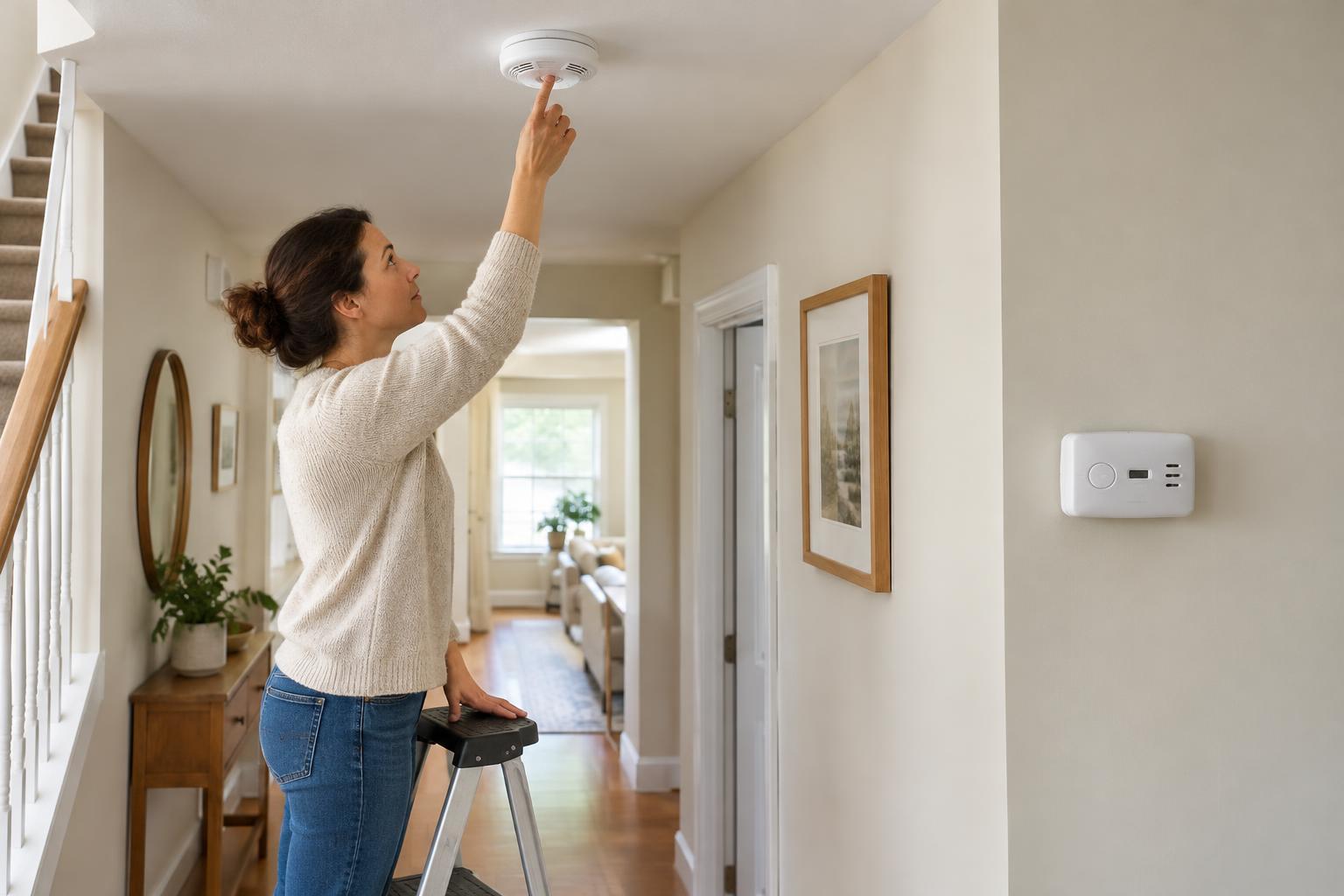
Choose a recurring day to test the alarms; a monthly reminder is a practical starting point, unless the manufacturer specifies a different schedule. Tell anyone at home before you begin, especially if the alarms are loud or interconnected. Stand securely on a step stool if you cannot reach a unit from the floor, and avoid stretching over furniture.
Follow the instructions for each model. Typically, you press and hold the test button until the alarm sounds, then release it. Check every unit individually, even if an interconnected alarm sounded during another unit's test. A test button checks important parts of the alarm and its power supply, but it does not prove that the sensing chamber will detect every hazard. Do not use a flame, vehicle exhaust, or a household spray to test an alarm; those methods can be dangerous or damage the device.
Keep a short record in a phone note or on a calendar: the test date, any unit that did not sound, and any follow-up needed. The point is not detailed paperwork. It is making it easier to remember which alarm needs attention when you have time to fix it.
Act on chirps, faults, and replacement dates
A periodic chirp is different from a full alarm, but it still needs attention. Depending on the model, it may signal a low battery, an end-of-life warning, or another fault. Check the unit's label or manual to identify its sound pattern. Replace a removable battery with the type specified by the manufacturer, then test the alarm again. Some units have sealed batteries that cannot be changed; when those units reach the end of their service life, the entire alarm must be replaced.
Alarms also have limited service lives, which can differ by device and manufacturer. Use the replacement date or instructions printed on the unit rather than assuming that a working test button means an old alarm can stay in place indefinitely. If an alarm fails a test after you have followed its troubleshooting instructions, arrange for repair or replacement promptly. Never leave a unit disabled or remove its battery to silence a persistent problem.
While you are there, gently clear dust from the outside of the alarm as its instructions allow. Avoid painting over it or letting it become blocked by storage, decorations, or ceiling work. Add an alarm check to your move-in checklist, too: a previous occupant's routine is not a substitute for knowing where your own alarms are.
Know what to do when an alarm sounds
Testing is useful only if everyone knows the difference between a planned test and an unexpected alarm. If a smoke alarm sounds unexpectedly, treat it as a possible fire: get everyone outside, stay outside, and contact emergency services from a safe location. If a CO alarm sounds, leave the building immediately and call emergency services from outside. Do not go back in to search for the source or assume that opening a window has solved the problem. Follow the instructions of emergency responders before re-entering.
Make sure household members recognize the sounds their alarms make, know the exits, and understand where to meet outside. You can review those basics when you do your routine test. The routine itself can stay simple: find each alarm, press its test button as directed, note any problem, and follow through. Consistency matters more than creating a complicated maintenance system.


