Start with the paper you actually receive
A useful filing system should match your household, not an idealized version of it. Before buying folders or a cabinet, gather the paperwork sitting on counters, in drawers and near the front door. Look for recurring types: bills, insurance information, appliance instructions, school forms or records related to your home. You do not need to sort every old paper at once. A small sample of what arrives regularly will show you what your system needs to handle.
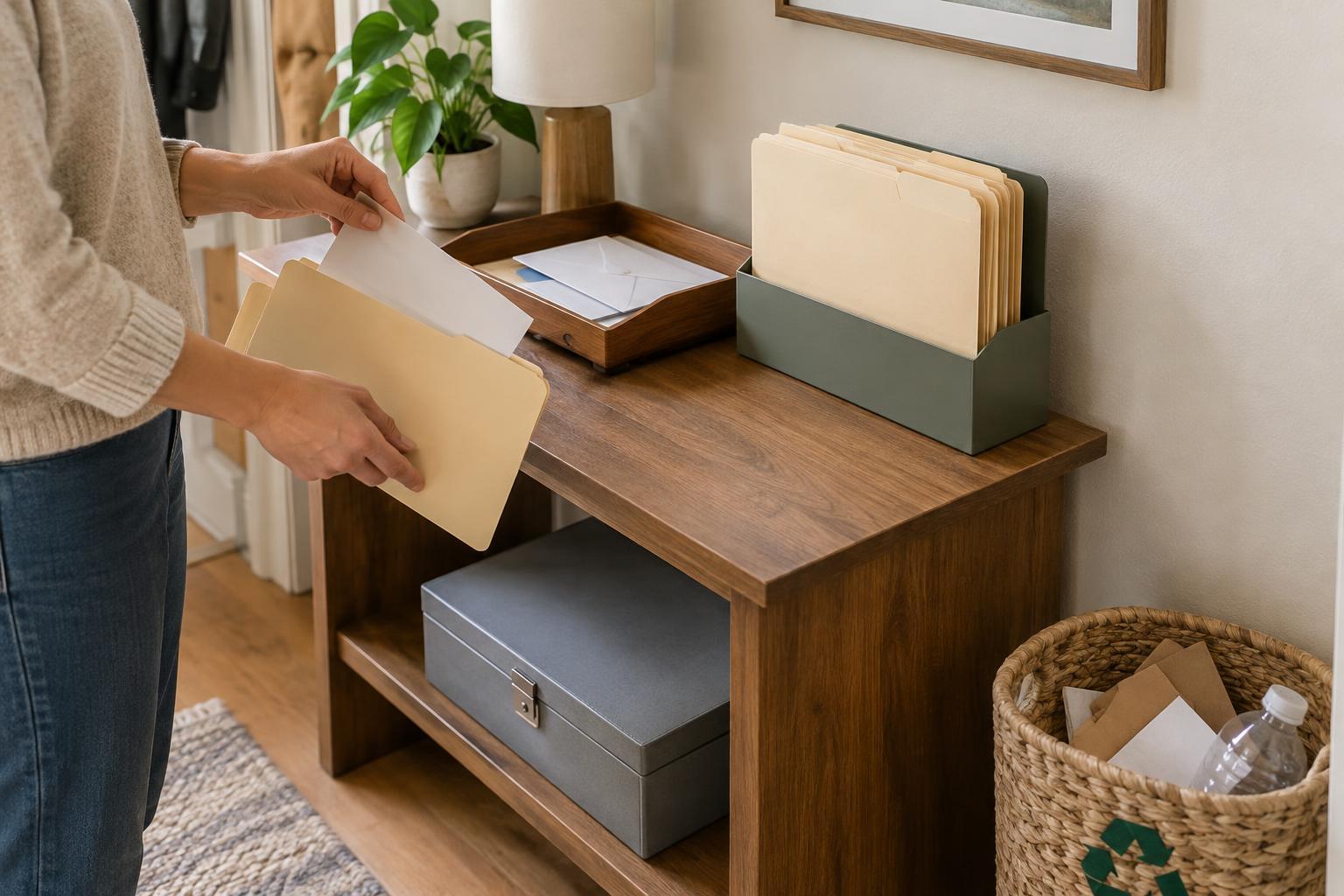
Choose one spot for incoming paper. A shallow tray, wall pocket or section of a desk is enough, provided it is easy to reach and does not block a work surface. Treat it as a temporary stop, not permanent storage. If several people bring in mail or forms, make sure everyone knows where to put them. One reliable landing place prevents paper from spreading through the home.
Give each document a next step
Sort incoming paper by what you need to do with it. A simple set of destinations is: act on it, file it, or discard it. Keep papers requiring action in a visible folder or tray, and add deadlines to whatever calendar you already use. File documents you expect to need again. Recycle ordinary unwanted paper; shred or otherwise securely destroy documents that contain sensitive personal information before disposal.
Try not to use a large “miscellaneous” pile as a fourth destination. When a document is hard to place, ask why you might look for it later. An appliance receipt, for example, may be easiest to find alongside that appliance’s manual and warranty information. If you cannot identify a reason to keep a paper, check whether any applicable requirement or personal need calls for it before letting it take up space.
Keep the filing categories broad
You can make a functional home file with a small box, an expanding folder or a few hanging files. Choose a container that fits the space you have and is easy to open. Broad labels such as Home, Utilities, Insurance, Purchases and Instructions, and Personal Records are often more useful than dozens of narrow folders. Add a category only when an existing one becomes difficult to search.
Within a folder, put newer documents at the front or use a labeled envelope for a specific project. For example, a home folder might contain a separate envelope for a repair that is still underway. Label files with words your household would naturally use. The goal is to retrieve a document without having to remember a complicated filing rule, whether your files live in a cabinet, on a shelf or in a renter-friendly portable box.
Separate everyday files from sensitive records
Not every document needs to be stored in the same place. Keep frequently used instructions and account information accessible, while placing identity documents and other sensitive records in a more secure location. Protect them from casual access, moisture and damage as best your space allows. Make sure a trusted household member knows how to locate essential records if you are unavailable, without leaving private information exposed.
Digital copies can make some documents easier to find, but scanning does not automatically mean the original can be discarded. Keep originals when they are needed, and check the relevant requirements before disposing of important records. If you store digital copies, use clear file names and a consistent folder structure. Protect the device or account you use, and consider a backup so a lost device does not become a lost document.
Maintain the system in short sessions
Set aside a few minutes at a regular interval to empty the intake spot. Handle quick tasks, move longer tasks into the action folder and file what is finished. When the action folder becomes crowded, check it for overdue tasks rather than creating another pile. A routine you can repeat is more valuable than an elaborate setup that only looks tidy on the day you assemble it.
Occasionally, review folders for duplicate, outdated or no-longer-useful material. Retention needs vary by document and circumstance, so avoid using a single discard rule for everything. This is also a chance to adjust labels that no longer make sense. A good paperwork system stays small enough to maintain, secure enough for what it holds and simple enough that everyone who uses it can find what they need.


