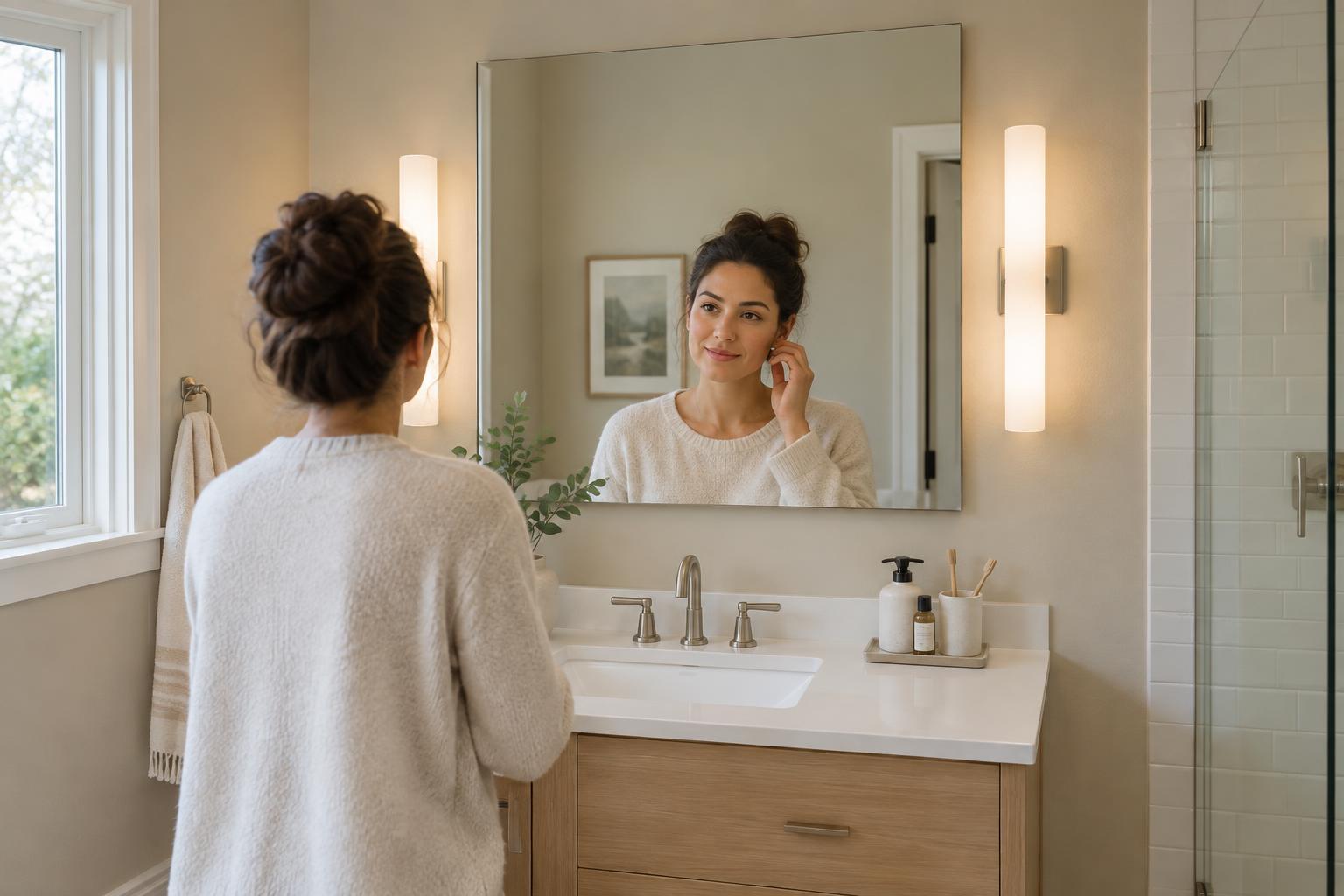
Start with where the shadows fall
A bright bathroom is not necessarily a well-lit bathroom mirror. A single ceiling fixture may illuminate the floor and counter while leaving shadows beneath the eyes, nose, and chin. A light mounted directly above the mirror can have a similar effect when it is the only source aimed at the face. For shaving, applying makeup, or checking details, the goal is light that reaches both sides of the face evenly.
Stand where you normally use the mirror and look at your face with the existing lights on. If one side is noticeably darker, a fixture may be blocked by your head or placed too far to one side. If the area under your brow is dark, most of the light may be coming from overhead. This quick check is more useful than judging the room by how bright the walls look.
Place light beside the face when you can
Fixtures on both sides of a mirror are often the simplest way to reduce facial shadows. Wall sconces, vertical light bars, or a mirror with integrated lighting can spread light across the face rather than directing it down from above. Aim for a balanced arrangement: similar fixtures at similar heights on either side, positioned so their illuminated areas overlap where a person stands.
The right placement depends on mirror width, vanity layout, and who uses the room. Fixtures that sit very far apart may light the walls more than the face; fixtures crowded against a narrow mirror can feel glaring. Before committing to a location, tape paper templates to the wall and check the view from each regular user’s standing position. In a shared bathroom, test for different heights as well as different spots along the counter.
If side lighting is not practical, an above-mirror fixture can still work better than a bare bulb. Look for one that spreads light across the mirror’s width and has a diffuser that limits sharp downward beams. Pairing it with gentle ambient light from the ceiling can help fill the remaining shadows, though overhead light alone is unlikely to provide the same balance.
Choose a soft, comfortable light
Diffusion matters as much as fixture placement. Frosted shades, opal covers, and fixtures designed to conceal individual bulbs can make the light appear broader and less harsh. Clear exposed bulbs may look attractive when switched off, but at eye level they can create glare in the mirror. Check the fixture from the doorway and from the normal position at the sink, not just straight on.
For everyday use, choose bulbs with a consistent color appearance across the bathroom. Mixing noticeably warm and cool bulbs can make the mirror area look uneven. A neutral-to-warm white may feel comfortable in many homes, but preference varies; compare bulbs in the room before replacing every lamp. If a bulb lists a color-rendering specification, a higher-quality option can help colors appear more natural, particularly for grooming tasks.
Brightness should be adjustable where possible. Light that feels useful on a dark morning may be unpleasant during a late-night visit. A compatible dimmer, separate switches for mirror and ceiling lights, or a small low-level night-light can offer flexibility without requiring the mirror fixtures to do every job.
Work with the bathroom you have
If you are planning a renovation, decide on the mirror and fixture locations together. A centered fixture will not necessarily be centered over the place where someone actually stands, especially at a wide double vanity. Check for cabinet doors, shelves, and tall faucets that could crowd the light or interrupt its spread. Leave enough visual space around the mirror so the lighting feels like part of the wall rather than an afterthought.
For a lower-commitment improvement, first match the existing bulbs and clean shades that may be dimming the light. A plug-in mirror light or a rechargeable fixture may suit some rental layouts, provided it can be mounted securely and kept appropriate for the bathroom environment. Avoid trailing cords near the sink or across a walkway. For any new hardwired installation, have a qualified electrician assess fixture suitability and the applicable electrical requirements.
Test the result at the mirror
The final check is practical, not decorative. Turn on the lights you would normally use, stand at the sink, and look for dark areas under the eyes and chin or a strong difference between the left and right sides of the face. Then check for glare reflected in the mirror and for bright points visible at eye level. Small adjustments to shade direction, bulb choice, or dimmer setting can make a noticeable difference.
A good mirror setup does not need to flood the whole bathroom with light. It gives the face even, comfortable illumination while ambient lighting keeps the rest of the room usable. Treat those as related but separate tasks, and the fixture choices become much easier to evaluate.


