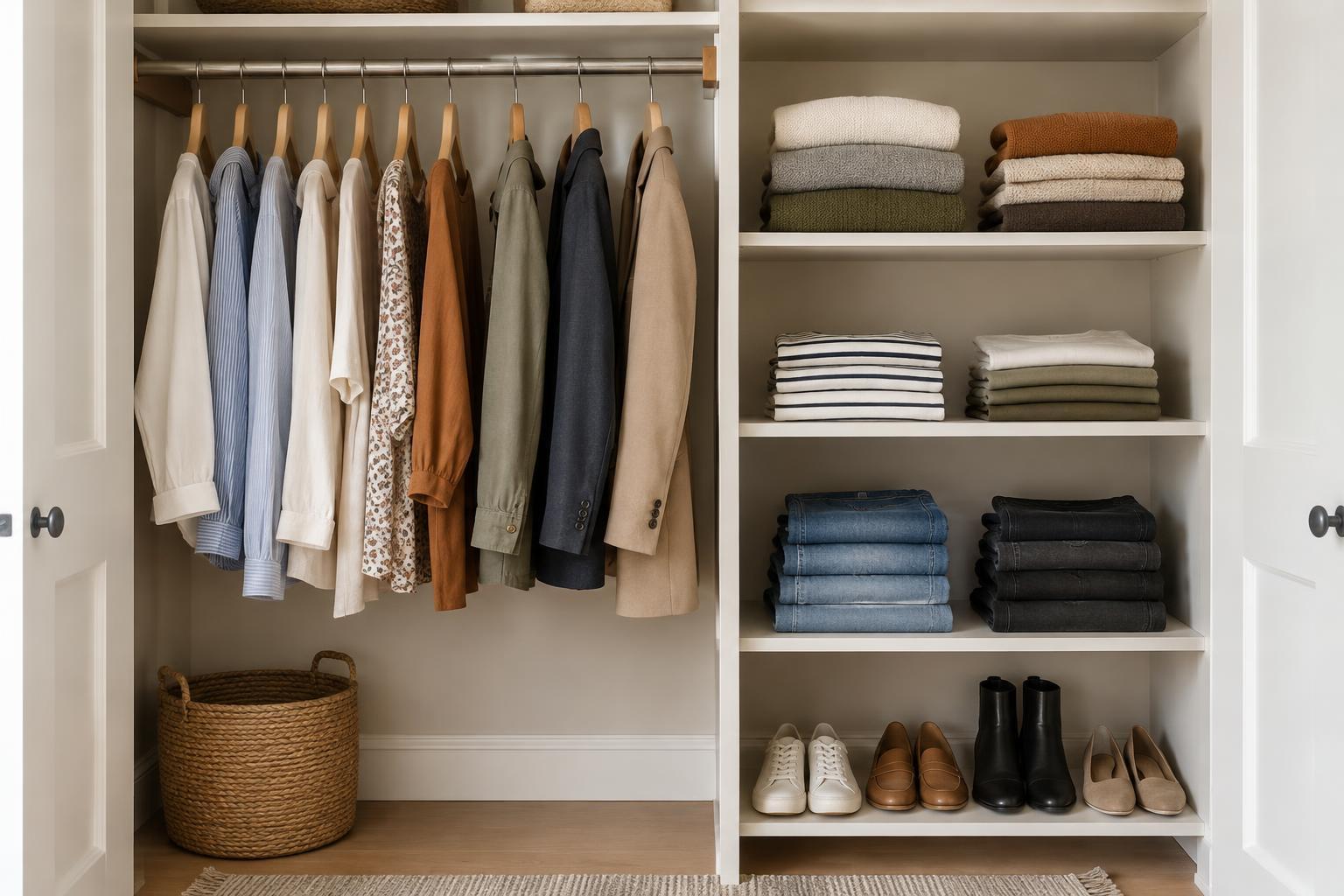
Start with the clothes and the space you have
A closet works best when its layout reflects what you own and how often you use it. Before buying organizers, take everything out and group similar items: shirts, trousers, knitwear, outerwear, shoes and accessories. Set aside anything that needs washing or repair so you can see what actually needs a storage spot.
Look at the available hanging space, shelf depth and floor area. Then choose a home for each group based on three questions: Will hanging help it keep its shape? Will its weight cause it to stretch? How easy does it need to be to reach? These questions matter more than following one rule for every garment.
Keep frequently worn items between shoulder and knee height where possible. Higher shelves and awkward corners are better for occasional-use pieces. Leave enough room to move hangers and lift items off shelves; a closet packed to its edges can be difficult to use, even when everything technically fits.
Hang items that benefit from staying open
Hanging suits garments that crease easily or have structure you want to preserve. Shirts, blouses, dresses, jackets and tailored trousers are usually good candidates. Give long pieces enough drop so their hems do not bunch on a lower shelf or the floor. If hanging space is limited, reserve it for the clothes that gain the most from it rather than hanging every top you own.
Choose hangers that support each garment without leaving sharp points at the shoulders. Broad, sturdy hangers can help jackets keep their shape; slimmer hangers may suit lightweight shirts. Fasten a button or zip on pieces that tend to slip or twist, and avoid forcing several heavy garments onto one hanger. Spacing clothes slightly apart also makes it easier to see them and put them away.
Not every item that fits on a hanger belongs there. Heavy sweaters and loosely knitted tops can stretch under their own weight. If a garment changes shape when hung, fold it instead. Check any care label when the choice is unclear.
Fold soft, stretchy and everyday pieces
Folding is often the better choice for knitwear, T-shirts, leggings, jeans, sleepwear and other clothes that do not need a full-length hanging position. It supports the weight of stretchy items and frees the rail for structured pieces. Fold garments to a consistent width that fits your drawer or shelf rather than aiming for a particular technique.
Drawers are useful for small, regularly used items because they keep the contents contained. A shallow drawer or divider can stop socks, underwear and accessories from mixing together. For larger pieces, short stacks usually work better than tall ones: you can remove one item without rebuilding the pile. If you use a deep drawer, placing folded items upright may make more of them visible at once.
Separate clothes by type or use rather than by an elaborate system you will not maintain. For example, keep work tops together and exercise clothes together if that matches how you get dressed. When a category starts spilling into another, consider whether its space is too small or whether some pieces no longer need to stay in the closet.
Make shelves earn their space
Shelves suit folded clothes, bags and items used less often, but they need clear limits. Put everyday folded pieces on shelves you can reach without stretching. Store occasional items higher up, preferably in a box or basket that you can lift down safely. Avoid loading a high shelf with heavy objects that are awkward to handle.
Use containers when they solve a specific problem: keeping small accessories together, preventing a soft pile from spreading or making a deep shelf easier to access. Choose sizes that leave room for your hand to grip them, and label containers that are not see-through. Bags may need to stand upright or be lightly filled so they do not collapse; shoes are easier to find when pairs stay together and visible.
Do not treat shelves as a place to hide overflow. If you cannot see or reach what sits behind the front row, rearrange the shelf so the back holds less-used items, or remove a layer of storage. The goal is not to fill every gap but to make each item easy to retrieve and return.
Test the layout in daily use
Once everything has a place, use the closet for a week or two before changing the hardware. Notice where clothes collect instead of being put away. A hamper too far from the closet, a crowded rail or a shelf that requires a stool for daily items may be the real cause of the clutter.
Small adjustments can help in both rented and owned homes. Moveable bins, drawer dividers and removable shelf risers can make existing storage more useful without changing the closet itself. Check that any added organizer is stable and does not block doors, airflow or access to other items. Wipe shelves before returning clean clothes, and let shoes or damp garments dry before storing them.
Revisit the arrangement when your wardrobe changes with the season or your routine. Hang pieces that need room, fold those that need support, and use shelves for items you can access safely. A straightforward system is easier to keep than one that depends on perfect folding or constant rearranging.


