Notice changes before looking for the source
Hidden water leaks rarely begin with a dramatic puddle. More often, the first clue is a change you cannot explain: a faint stain on a ceiling, paint that bubbles, a baseboard that swells or a floor that feels soft near a sink or appliance. A persistent musty smell can also point to moisture, especially inside a cabinet or in a room that normally stays dry.
Look for patterns rather than treating any single mark as proof of a plumbing leak. Does a patch grow after someone showers, runs the dishwasher or uses an upstairs bathroom? Is a cabinet damp even when nothing has spilled? Take a photo and note where and when you noticed the change. That gives you a useful comparison if the area gets worse and helps a plumber or property manager understand the problem.
Check the fixtures and appliances nearby
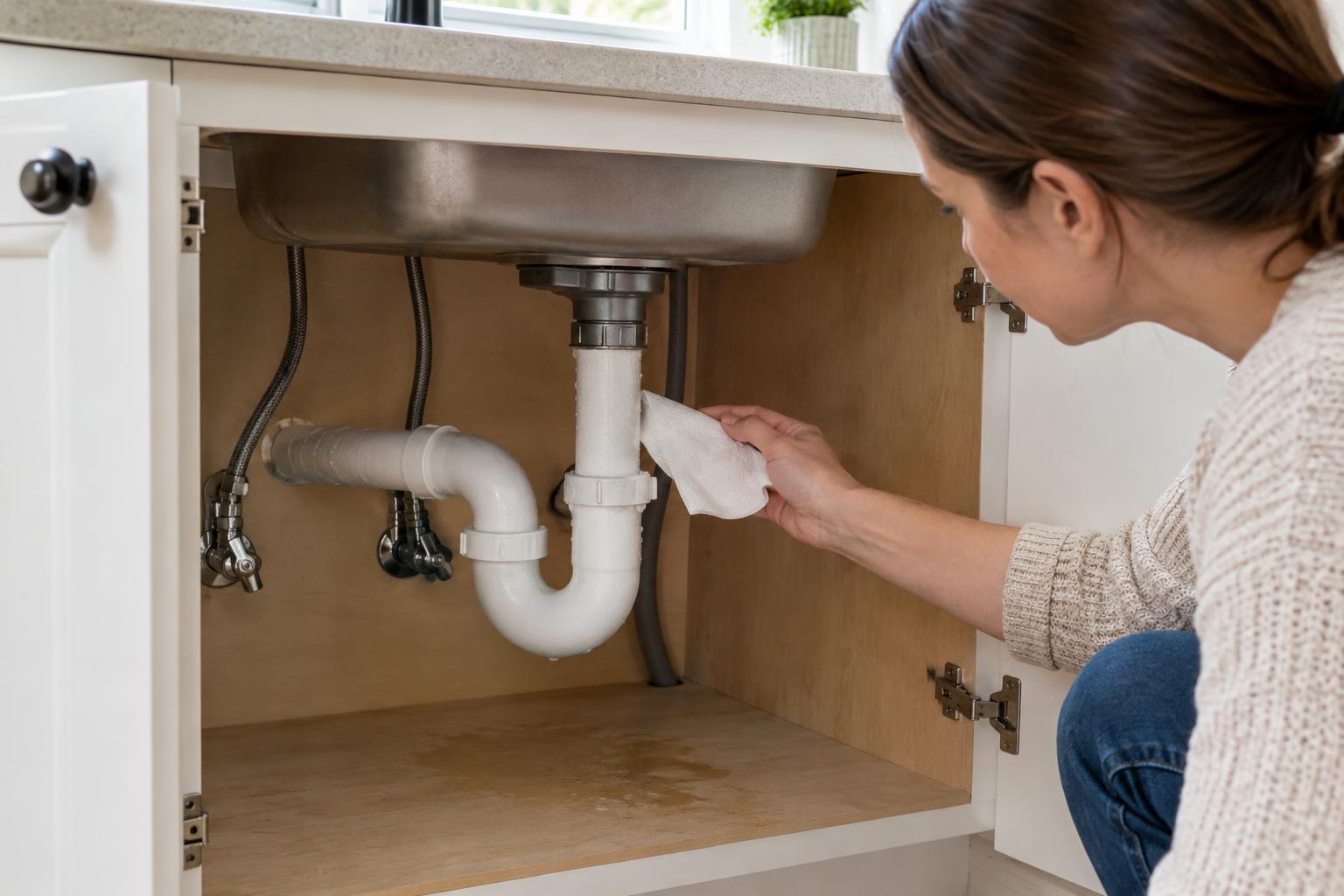
Start with places you can inspect without moving heavy equipment or opening walls. Under sinks, use a flashlight to look at supply lines, the drain connection and the cabinet floor. Feel for moisture with a dry paper towel around accessible connections, but do not tighten a fitting simply because it looks suspicious; an aging connection may need proper repair. Check around the base of toilets and behind them where visible, then look at the floor near tubs and showers.
Next, consider appliances that use water. Inspect the visible area around a washing machine, dishwasher or refrigerator with a water dispenser. A slow drip may appear only while an appliance runs, so check again after its next normal cycle if the area is safe and dry enough to observe. Do not pull out a heavy appliance or reach near electrical connections to investigate.
A running toilet can waste water without leaving a wet floor. Listen for refilling when no one has used it. If you can safely access the tank, put a few drops of food coloring in the tank and wait without flushing. Color appearing in the bowl suggests water is passing through the tank seal. Avoid this test if the coloring could stain the fixture, and follow the product's cleanup guidance.
Use the water meter to narrow the question
If you have access to an individual water meter, it may help show whether water is moving when it should not be. Turn off taps and make sure water-using appliances are not running. Check the meter's flow indicator or record its reading, then leave water unused for a short period and check it again. A change can suggest a leak, although automatic equipment, a running toilet or someone else using water can affect the result.
The meter will not tell you where a leak is, and a steady reading does not rule out a leak that occurs only when a particular fixture runs or when rain enters the building. If you rent, live in a building with a shared meter or cannot reach the meter safely, skip this step. Report the signs you have observed rather than trying to access restricted equipment.
Distinguish leaks from other moisture
Not every damp patch comes from a pipe. Condensation may form on cold supply pipes, windows or poorly ventilated surfaces, while rainwater can enter around a roof, window or exterior wall. Note whether the moisture follows plumbing use, humid weather or rainfall. A stain directly below a bathroom deserves attention, but its position alone may not reveal the source; water can travel before it becomes visible.
Do not cover a damp area with paint or seal it behind new flooring. Drying the visible surface does not address continuing moisture underneath. Keep the area accessible, and avoid disturbing damaged materials while you arrange an inspection. If water is near an outlet, light fitting or electrical appliance, stay clear of the affected area and seek qualified help.
Know when to act quickly
If water is actively escaping, shut off the relevant fixture valve or the home's main water valve if you know where it is and can reach it safely. Move belongings away from the wet area without touching electrical equipment. A rapidly spreading stain, sagging ceiling, soaked flooring or recurring moisture after you dry a surface calls for prompt attention from a qualified professional.
For a smaller suspected leak, record what you found and arrange a repair before the damage spreads. Renters should notify their landlord or property manager promptly and follow the property's reporting process. The goal of these first checks is not to diagnose what is happening inside a wall; it is to identify useful clues, limit avoidable damage and get the right help sooner.


