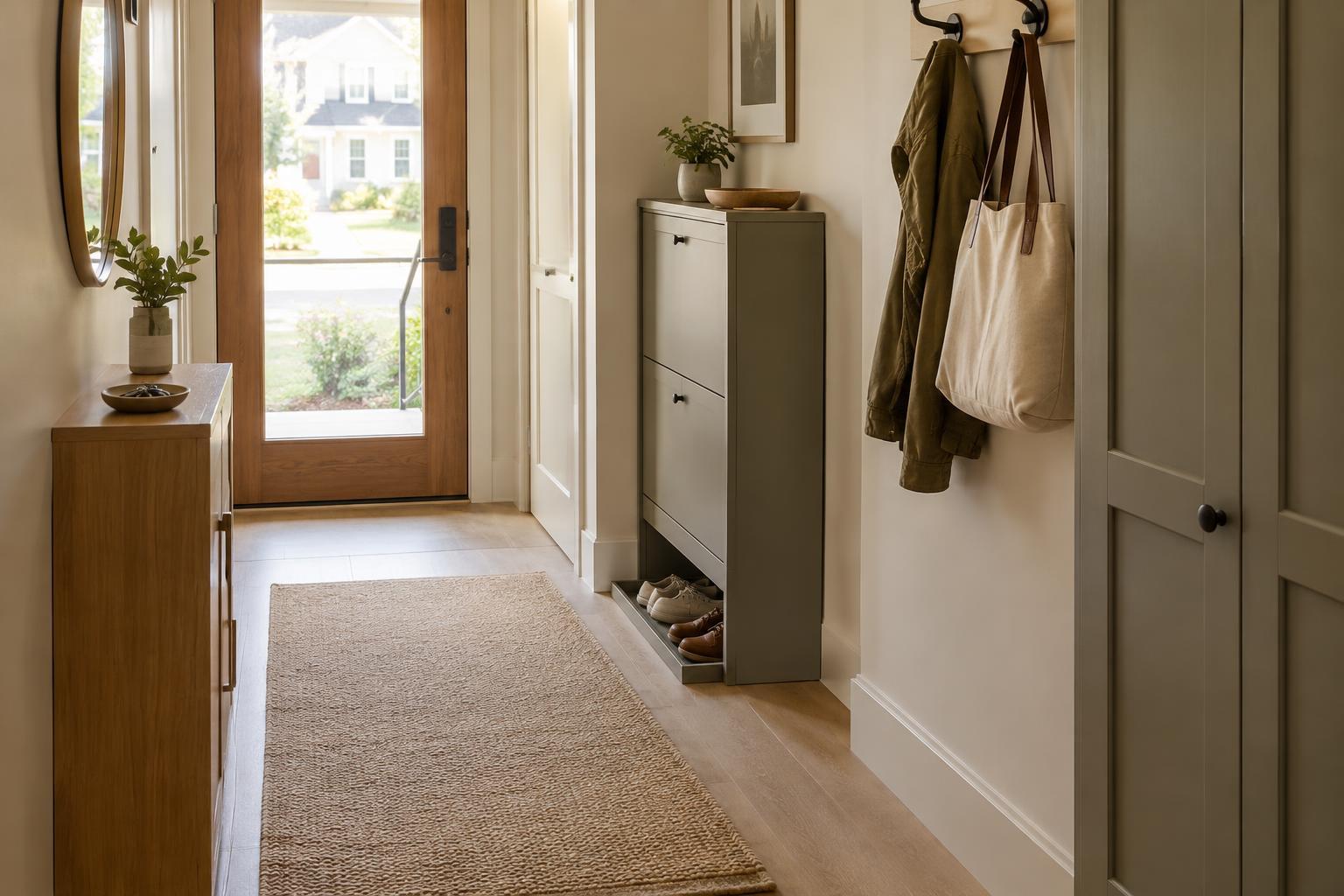
Start with the route through the door
An entryway has to do more than hold things: it must let people come and go comfortably. Before buying a bench or adding hooks, watch where shoes are removed, where bags tend to land and which direction the door swings. Keep that path clear, including space to open a closet or reach a light switch. In a narrow hall, a shallow shelf and wall hooks may work better than a full-size storage unit.
Make a quick list of what actually arrives each day. Separate daily items from occasional ones such as guest coats, spare footwear and seasonal accessories. Give the daily group the easiest-to-reach spots. If every pair of shoes and every coat stays by the door, even generous storage can feel crowded. Moving less-used items elsewhere is often the simplest improvement.
Give shoes a defined footprint
Choose a shoe zone based on how many pairs need to be available at once, not how many the household owns. A low rack makes pairs easy to see and helps prevent a pile from spreading across the floor. A cabinet with doors offers a calmer look, though its compartments need to fit the shoes you wear most. If you use a bench, check that its seat leaves enough room to put shoes on without blocking the walkway.
A washable mat or tray can contain damp soles and loose dirt. Leave room to lift it out for cleaning rather than wedging it beneath heavy furniture. For a small entry, try one designated spot per person and move overflow pairs to a bedroom closet or another storage area. That simple limit keeps the floor usable and makes it easier to notice when the setup needs resetting.
Place coats and bags where they are easy to return
Hooks are effective because hanging something takes little effort. Place them where users can reach without stepping around the door, and leave enough separation for bulky coats. A rail or a row of hooks can look more orderly when its width relates to a bench, shelf or shoe rack below it. If drilling is an option, choose suitable fixings for the wall and the expected load; renters can consider an over-door rack or a freestanding stand where it will not tip or obstruct the entrance.
Bags need their own plan. Heavy totes and backpacks may crowd coat hooks, so a lower hook, a sturdy shelf or an open cubby can work better. Assigning a place to each regular user helps prevent bags from migrating to chairs and countertops. Keep guest storage flexible: a spare hook or a little closet space is more useful than filling every position with everyday gear.
Build a small landing spot for keys
Keys, transit cards and other pocket items are easiest to find when they have one consistent destination. A small tray on a shelf, a wall-mounted key rail or a compartment in a console can all work. Put the landing spot close to where you naturally pause, rather than where it looks best in an empty room. If loose papers also collect there, add a separate holder for mail so the key area stays visible.
Keep this surface deliberately small. A broad console can become a catchall, while a narrow shelf encourages you to leave only what belongs at the door. If the entryway has no room for furniture, a compact wall organizer can combine hooks and a ledge. Mount or position it so items are reachable but do not snag coats or interfere with the door.
Make the system easy to live with
Matching every container is less important than making the whole arrangement feel intentional. Repeat a few simple finishes, such as one hook color and one type of basket, and leave some empty space so belongings can be put away without careful arranging. Closed storage can quiet visual clutter; open storage is often easier to use for items that come and go several times a day. A mix of the two suits many households.
Start with the least expensive changes: remove rarely used items, add a floor tray, designate hooks and give keys a fixed spot. Live with that layout before investing in a cabinet or built-in unit. Once a week, return stray items to their proper rooms and clean the shoe zone as needed. The best entryway system is not the one that holds the most; it is the one people can reset quickly on an ordinary day.


