Start with the light you want
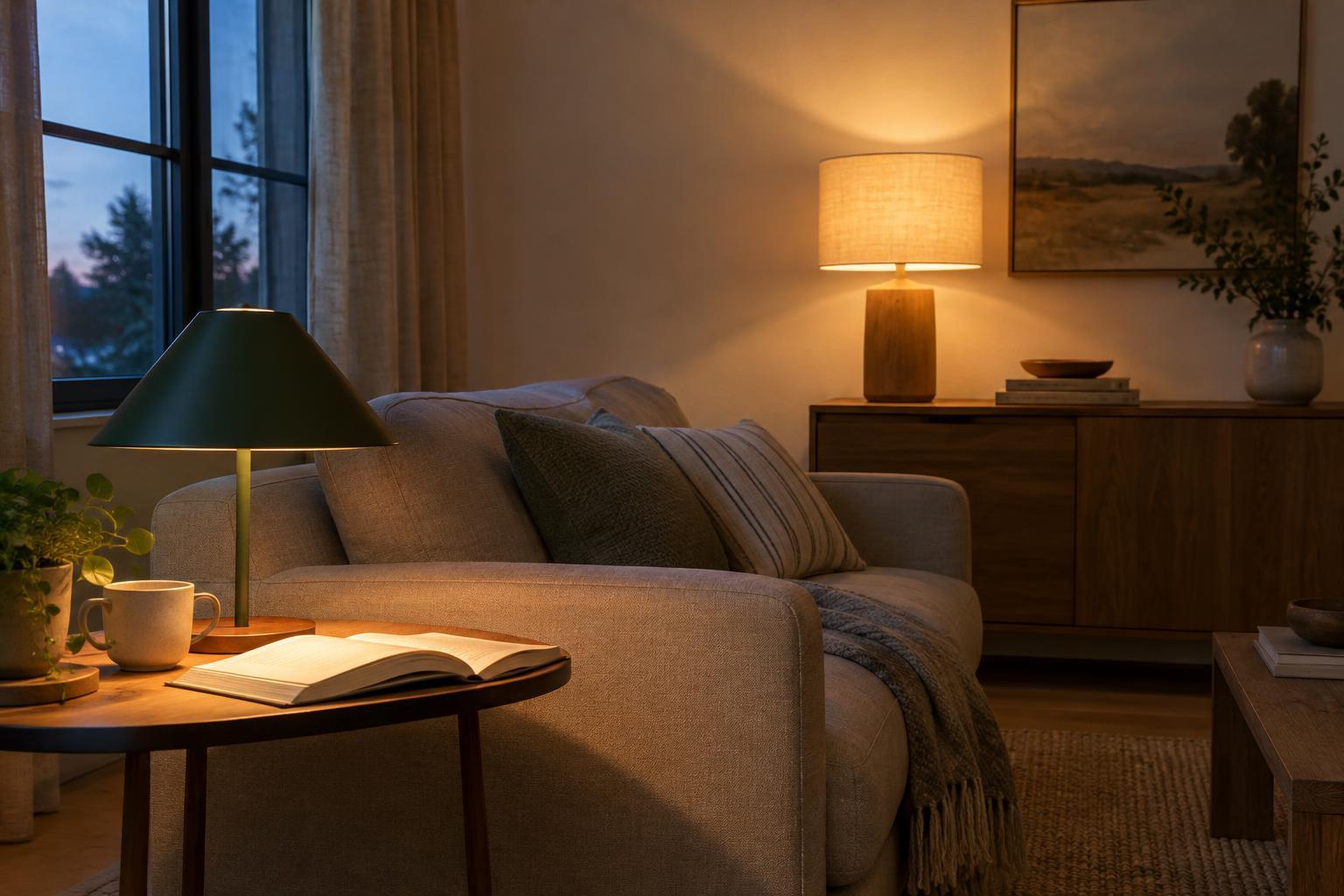
The same lamp can serve different purposes depending on its shade. A shade that lets light pass through its sides can help a room feel gently illuminated. One with opaque sides sends more light out of its openings, making a clearer pool of light above or below the lamp. Neither is automatically better: the right choice depends on where the lamp sits and what you do nearby.
Before shopping, decide whether the lamp needs to help you read, soften a dark corner or add a low glow while other lights do the practical work. Look at it both while seated and while standing. A shade that hides the bulb from one position may expose it from another, especially beside a sofa or on a low bedside table. Controlling that direct view of the bulb is often more useful than simply choosing a dimmer one.
Shape directs light through the openings
A shade’s top and bottom openings give light paths out of the lamp. A broad lower opening tends to spread light over more of the surface beneath it, which can suit a table lamp near a chair. A narrower lower opening may create a more contained patch. A wide top opening can send more light toward the ceiling, where a pale finish may reflect it back into the room. The lamp’s position, bulb and nearby surfaces will all affect the result.
Straight-sided drum shades offer a relatively even band of light around the lamp when their sides are translucent. Tapered shades have a narrower top and a wider bottom, so they can emphasize light below the lamp. A deeply flared or bell-shaped shade can make that downward spread more pronounced. These are useful tendencies, not guarantees: two shades with the same outline may perform differently if one has thick, opaque sides and the other is made from thin fabric.
Opacity controls glow and glare
A translucent shade becomes part of the light source. Fabric, paper or frosted material can diffuse light through the sides, softening the contrast between the lamp and the room around it. Thin or loosely woven materials may still reveal a bright bulb or its outline. If that view feels harsh, try a more diffusing shade or a bulb whose brightness and appearance are comfortable in the fixture.
An opaque shade blocks light through its sides. This can keep the bulb out of sight and create a more focused effect through the top and bottom openings. It can also leave the surrounding wall darker than you expect. The inside matters too: a light-colored lining generally reflects more light out of the openings, while a dark lining absorbs more and can make the pool of light feel subdued. Shade color can tint the light passing through its sides, so check fabric samples with the lamp switched on when possible.
Match the shade to the lamp’s job
For a reading chair, prioritize light on the page without placing a bright opening at eye level. A shade with a generous lower opening may help, but the lamp’s height and distance from the chair matter just as much. At a bedside, consider what the lamp looks like from a reclining position. A narrow shade perched high above the bulb may look tidy when you stand beside it yet cause glare when you lie down.
For general atmosphere, a softly translucent shade can make a corner feel less isolated from the rest of the room. If you want to highlight a small area instead, an opaque shade may give more definition. In a room with several lamps, the shades need not match: a more directional lamp can handle a task while a diffusing lamp eases the contrast elsewhere. Choose shades for the light each position needs, then look for a common color, material or proportion if you want them to feel visually connected.
Test the fit before committing
Shade proportions affect both appearance and performance. Check that the shade conceals the bulb and socket from normal viewing angles without blocking the useful light below. Make sure its fitting works with the lamp and that the shade sits level. If you can, test it in the room after dark; daylight can hide glare and make a shade seem brighter or more transparent than it will feel in the evening.
Use a bulb and shade combination allowed by the lamp and shade makers, including any guidance on bulb type, wattage and clearance. This matters particularly with enclosed or closely fitted shades, where heat can be a concern. If the result is disappointing, change one thing at a time: adjust lamp position, try an appropriate bulb, or swap the shade. Small changes in height, opening width or opacity can make a noticeable difference without replacing the whole lamp.


