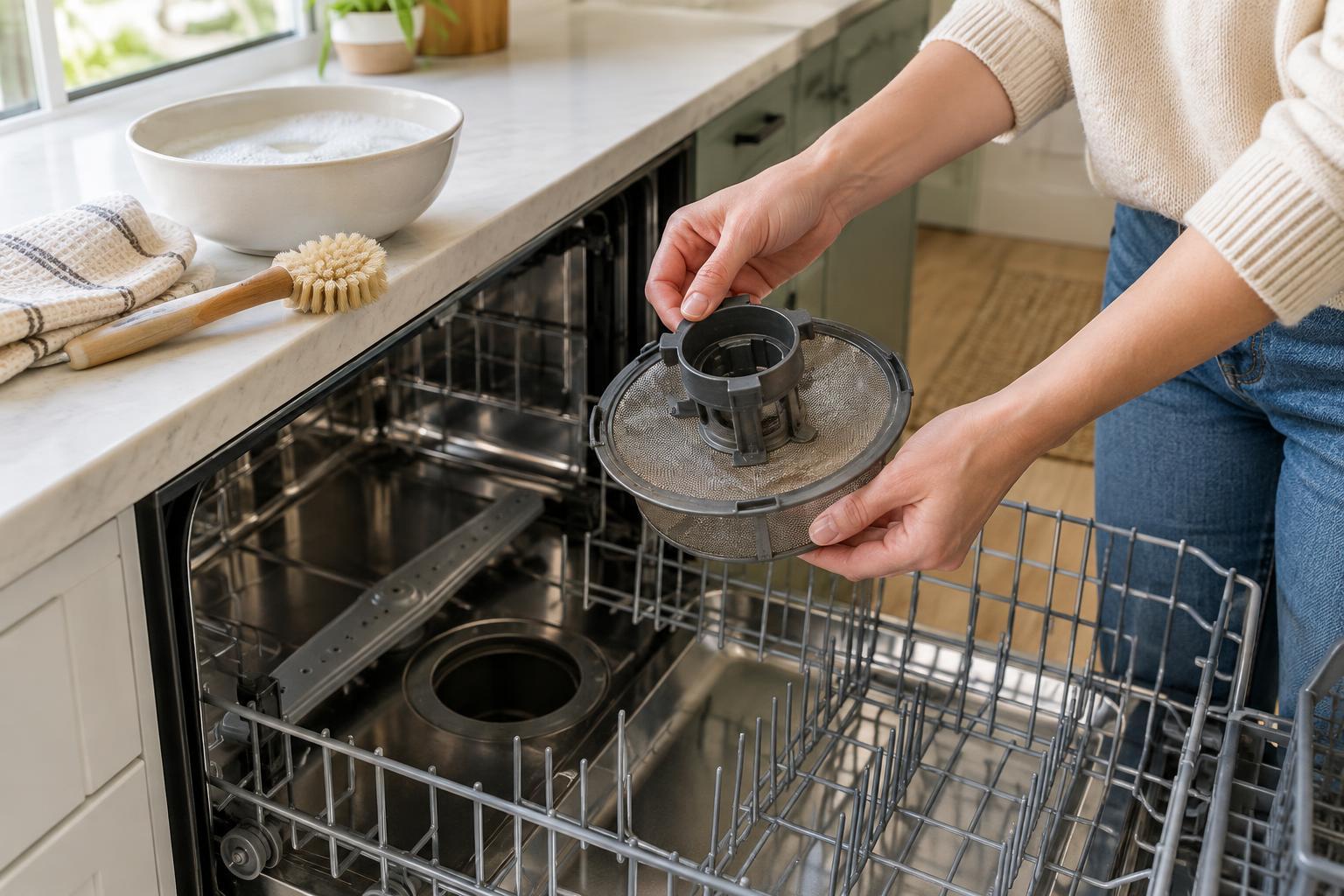
Start with the filter
A dishwasher filter catches food particles before they can circulate through the wash water or reach the drain. When debris sits there, it can produce an unpleasant smell and may leave dishes less clean. Many dishwashers have a removable filter at the bottom of the tub, beneath the lower rack. Designs vary, though, so check your appliance manual before trying to take anything apart.
Let the dishwasher cool, pull out the lower rack, and look around the base of the lower spray arm. If the filter is removable, follow the manual’s directions to unlock and lift it out. Some assemblies have both a cylindrical filter and a flat screen. Take note of how the pieces fit together so you can put them back securely.
Wash the filter without damaging it
Empty loose food into the trash rather than rinsing large scraps down the sink. Wash the filter under warm running water, using a soft brush or an old toothbrush to loosen residue from the mesh and edges. A little mild dish soap can help with greasy buildup; rinse it away thoroughly. Avoid wire brushes, sharp tools, or forceful scrubbing that could tear the mesh or damage a seal.
Before reinstalling the filter, wipe the opening and the surrounding floor of the dishwasher with a damp cloth. Check for bits of food or other objects you can easily lift out. Do not reach into a drain opening or remove fixed parts to hunt for debris. Replace the filter exactly as directed and make sure it locks into place. Running the dishwasher with a loose or missing filter could let debris reach areas that are harder to clean.
Check other places odors can hide
If the smell remains, inspect the door edges, detergent dispenser, and rubber gasket. Food and residue can collect in folds and corners that the wash cycle does not reach well. Wipe these areas with a soft cloth, warm water, and a small amount of mild dish soap, then wipe again with clean water. Look at the spray arms, too: if visible holes are blocked, consult the manual for the recommended cleaning method rather than poking them with a tool.
Next, check what happens after a cycle. A small amount of water in a recessed area may be normal for some models, but standing water across the tub floor is a reason to investigate. Check the filter’s seating and, if your dishwasher drains through a kitchen sink or garbage disposal, notice whether that fixture is draining slowly as well. Follow the appliance manual for any accessible drain checks. If water repeatedly remains in the tub, the issue may be beyond routine cleaning.
Run a cleaning cycle and reassess
Once the visible debris is gone, run an empty hot cycle or the machine’s cleaning cycle, if it has one. Use a dishwasher cleaner only if it is suitable for your model, and follow its label. Do not combine cleaning products. In particular, never mix bleach with vinegar or other cleaners. If your manual recommends a specific cleaning method, use that guidance instead of a general household remedy.
Open the door after the cycle and check whether the smell has improved. A musty odor may reflect dampness left in a closed machine; letting the interior dry between uses, when practical, can help. A strong sewage-like smell, recurring standing water, or an odor that returns quickly after cleaning deserves closer attention. If simple checks do not identify the cause, an appliance technician or plumber can assess the dishwasher and its drain connection.
Make filter care an easy habit
The best cleaning schedule depends on how often you run the dishwasher, how much food goes in with the dishes, and what the manual recommends. Make a point of checking the filter periodically, especially if you notice an odor, gritty residue, or a change in cleaning performance. Scrape large food scraps into the trash before loading, but there is usually no need to hand-wash every plate first.
At the end of a cycle, unload any items that have tipped over and held dirty water. Wipe up obvious spills around the door, and avoid leaving heavily soiled dishes in the closed machine for long periods. These small steps will not fix a drainage fault, but they can reduce the food and moisture that give everyday odors a place to start.


