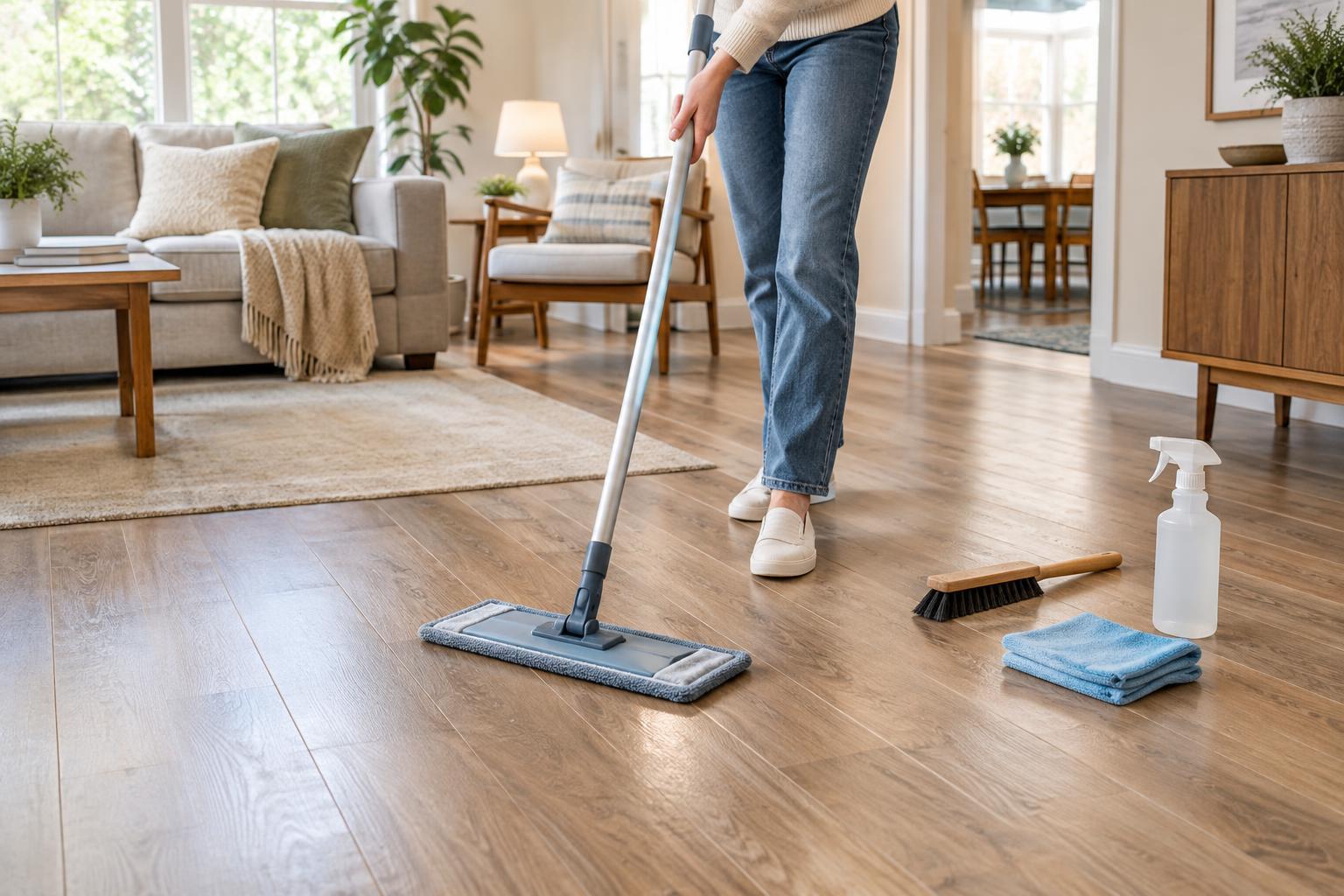
Start by identifying the floor
Hardwood, laminate and vinyl can look similar, but they do not all respond to cleaning in the same way. Hardwood has a wood surface protected by a finish. Laminate typically has a decorative surface over a wood-based core, which makes standing water around seams a concern. Vinyl is generally more water-resistant, but water can still collect at edges, under loose planks or against baseboards. The safest routine accounts for both the visible surface and the joints between pieces.
If you are unsure what you have, check any installation paperwork or care instructions before trying a new product. A floor that looks like solid wood might be engineered wood, and its approved cleaning methods may depend on its finish. When instructions are unavailable, begin conservatively: remove dry debris, use as little moisture as practical and test any cleaner in an inconspicuous spot.
Remove grit before you mop
Dust, sand and crumbs are worth clearing regularly because they can be dragged across a floor by shoes, chair legs or a mop. Use a soft broom, a dry microfiber mop or a vacuum set up for hard floors. If your vacuum has a rotating brush, switch it off when the machine allows; a stiff or dirty brush can mark some finishes. Pay particular attention to entrances, under dining chairs and along kitchen work areas, where debris tends to gather.
Deal with sticky spots separately rather than pressing harder with a mop. Lift residue gently with a slightly damp microfiber cloth and dry the area afterward. Avoid scouring pads, metal tools and abrasive powders, which can dull or scratch the surface. Removing isolated marks first also helps keep the mop water cleaner, so you are less likely to spread residue across the room.
Match moisture and cleaner to the material
For hardwood, use a cleaner recommended for the floor’s finish and apply it according to the label. A microfiber mop should be lightly damp, not dripping, unless the floor maker specifies another method. Work in small sections, keep liquid out of gaps and wipe up any remaining moisture. Avoid routine wet mopping, steam cleaning and leaving puddles in place. Older floors or floors with worn finishes may need an even gentler approach because exposed wood can absorb moisture.
Laminate also benefits from a barely damp mop and prompt drying, especially near seams and cut edges. Do not assume that a floor marketed as water-resistant can tolerate prolonged soaking. For vinyl, a damp mop is often suitable, but check the product’s care guidance before choosing a cleaner or using a steam mop. Across all three materials, measure concentrate as directed: extra cleaner may leave a film rather than improve the result. Skip waxes, polishes and oil-based soaps unless the flooring instructions specifically call for them.
Handle spills and stubborn marks carefully
Blot spills as soon as you notice them, then clean any remaining residue with the method appropriate for the floor. For a sugary drink or tracked-in mud, start with a soft, damp cloth rather than pouring water over the area. Dry the floor afterward, including along plank edges. If a liquid has sat for a while and a seam looks raised or a board looks discolored, do not try to correct the damage with more cleaning solution.
For marks that do not lift with a gentle wipe, consult the flooring or finish maker’s guidance before using solvents or specialty stain removers. Strong chemicals and improvised mixtures can affect coatings, and a product that works on one floor may leave another looking cloudy. Test an approved method in a hidden area, use only the amount needed and stop if the finish changes appearance.
Make the routine easier on the finish
Place mats at entrances to catch grit, and clean the mats often enough that they do not become a source of debris. Add suitable pads beneath furniture legs, replace worn pads and lift heavy pieces instead of dragging them. A rug in a busy area can reduce wear, but choose a backing that is compatible with the floor; some rubber-like backings may discolor certain finishes. Put a washable mat where splashes are common, provided it can be lifted so the floor beneath can dry.
A simple schedule is usually more useful than an occasional deep clean: clear grit when it appears, spot-clean spills promptly and damp-mop only when the floor needs it. Keep the mop head clean and change the cleaning solution if it becomes dirty. Once the floor is dry, check it in angled light. If you see streaks, the answer may be less product or a cleaner mop head—not a stronger chemical.


