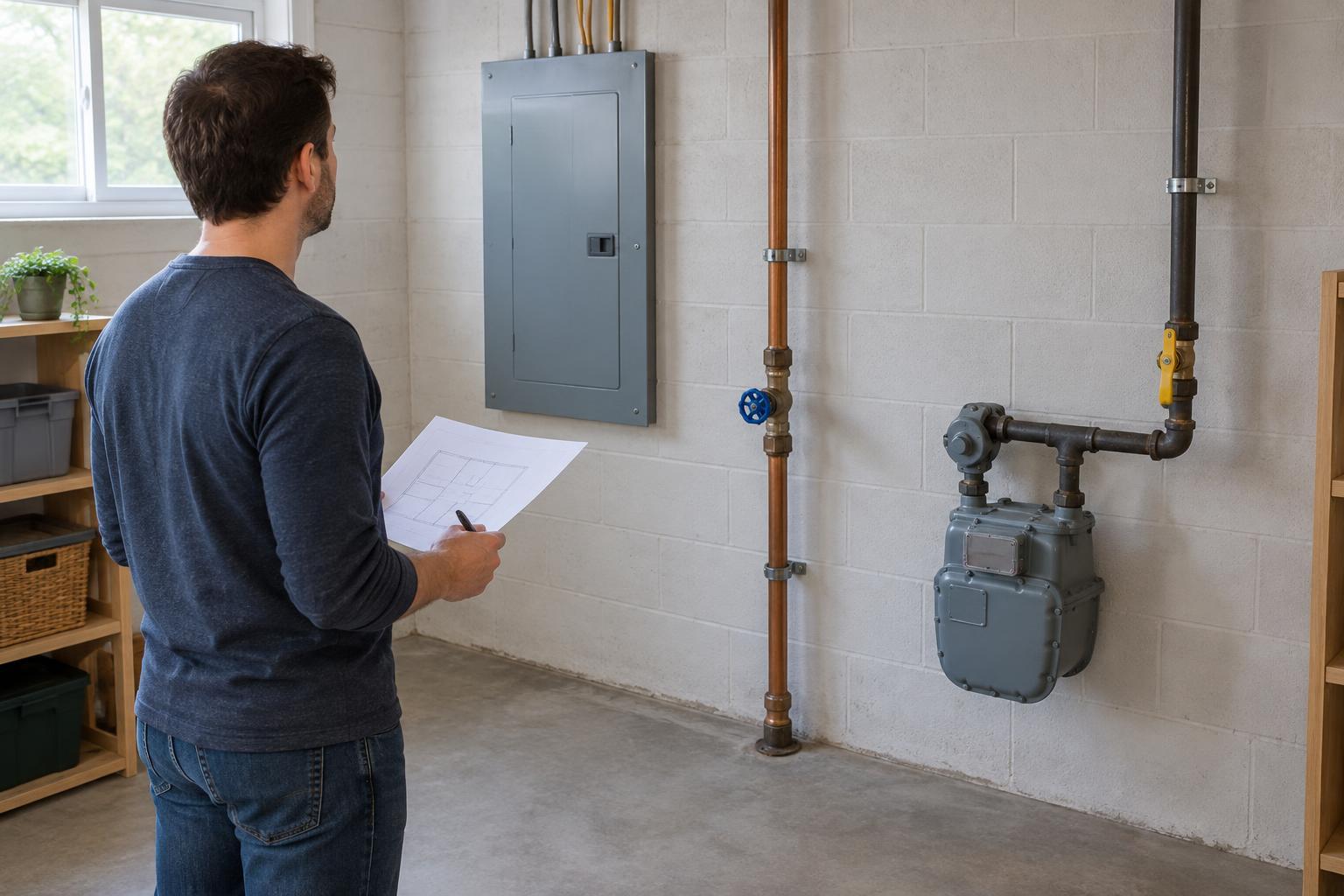
Start with a safe, simple inventory
A shutoff is useful only if you can find it when you need it. Set aside a little time to locate your home’s main water valve, any local water valves, the electrical panel and, if the property has gas service, the gas meter or designated shutoff. You do not need to operate every control during this search. The first goal is to identify what each control serves and whether you can reach it without moving heavy items.
Bring a flashlight, a notebook and labels you can read in dim light. Look for existing tags or a property plan before making new labels. In a rental, shared building or unfamiliar home, ask the landlord, building manager or utility provider which controls are yours. A locked utility room or a valve serving several units is not something to guess about.
Find the water valves, from fixture to main
Start at fixtures. Many sinks and toilets have small shutoff valves on the pipes nearby; a washing machine may have valves behind it or in a laundry box. These local controls can isolate one fixture without interrupting water throughout the home. Note which fixture each valve serves, especially if several similar valves sit together.
Next, trace where the water supply enters the building. The main shutoff may be in a basement, crawl space, utility closet or garage, or near an exterior meter. Its location varies by building and climate. If you cannot identify it confidently, ask a plumber or the water provider rather than trying an unmarked valve. Keep stored items clear of the route to it.
Do not force a valve that is stuck, corroded or leaking. If you choose to test an accessible valve, do so when you can monitor it, turn it gently and check afterward for drips. A valve that will not move smoothly deserves attention before an emergency, not extra pressure from a tool.
Identify gas controls without taking risks
If your home uses gas, find the meter and any clearly identified appliance shutoffs. Meters are often outside or in a designated utility area, while an appliance shutoff may be near the appliance it serves. Access and responsibilities differ between properties, so confirm with your gas provider or building manager which valve, if any, residents should use. Do not move a valve simply to discover what it controls.
If you smell gas, hear a suspected gas leak or otherwise suspect an active leak, leave the area. Avoid flames, electrical switches and devices that could create a spark while you are inside. Once you are safely away, contact the gas provider or emergency services according to local guidance. Do not return until you are told it is safe. If gas has been shut off, leave restoration and any required checks to the appropriate provider or qualified professional.
Map the electrical panel clearly
The electrical panel is commonly in a garage, basement, utility space or hallway cabinet. Find it in good light and make sure the door can be opened without shifting stored belongings. You can read the breaker labels and identify the main disconnect if one is clearly marked, but do not remove the panel cover or touch exposed wiring. If the panel is damaged, wet, unusually hot or making alarming sounds, keep your distance and seek qualified help.
Breaker schedules are not always accurate. To improve one, have another person check lights and outlets while you turn off one clearly accessible branch breaker at a time, then turn it back on before moving to the next. Avoid doing this when an interruption could create a problem for equipment or occupants. Record what you verified, and mark uncertain circuits as uncertain rather than assigning them a confident-sounding name. Ask a licensed electrician to resolve confusing or unsafe panel conditions.
Make a map the household can use
Label each confirmed control with plain words such as “Main water,” “Kitchen sink water” or “Living room outlets.” Attach labels where they remain visible without covering warnings, ratings or instructions. For an electrical panel, a neat circuit list on or beside the panel door is more useful than vague labels such as “lights.” Use a pencil or an easily updated sheet if you expect to revise it.
Make a one-page map showing the route to each main shutoff, what it controls and any access limitations. Keep a copy in an easy-to-find household location and share it with other residents. Include the building manager’s or utility provider’s contact details where relevant, without putting private information on a label visible to visitors. Review the map after renovations, appliance changes or a move-in. The best shutoff plan is modest: clear labels, unobstructed access and an honest note wherever you still need expert confirmation.


