Start with the view, not the fixture
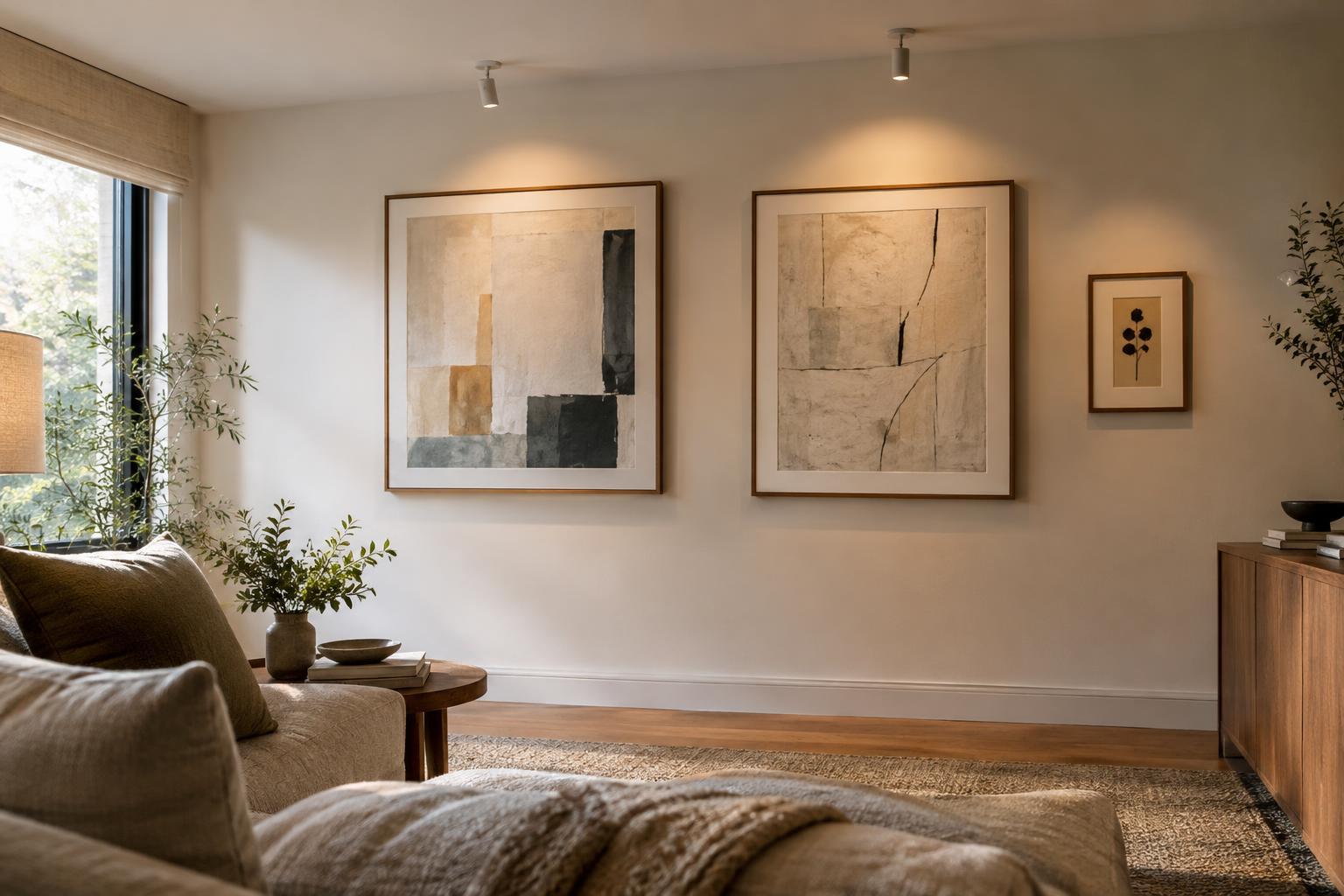
Before choosing a picture light or spotlight, stand where you usually see the display. That might be the sofa, a dining chair or the doorway into a room. Notice whether the artwork is already visible in daylight and after dark. The goal is not necessarily to make it the brightest thing in the room; it is to make its colors, shapes and details comfortable to see without drawing attention to the lamp itself.
Consider the whole wall as well as the individual piece. A single framed print may benefit from a focused light, while a gallery wall often looks more coherent with a broader, softer wash of light. If the wall sits beside a reading chair or desk, decide whether the light should serve that activity too. Making that choice early can prevent a collection of fixtures that compete with one another.
Test the angle before committing
Glare often appears when a bright bulb or its reflection is visible from a common viewing position. To check a proposed location, hold a portable lamp near it and move around the room. Look at the display while seated and standing. If you see a bright spot on glass or a shiny surface, try moving the light to one side, raising it or changing the direction of its beam. A small adjustment can make more difference than a brighter bulb.
Framed works behind glass need particular attention because reflections can obscure the image. Matte finishes may be more forgiving, but textured or glossy artwork can still show uneven bright patches. If you are lighting several pieces, check the spaces between them as well. The arrangement should feel connected rather than like a row of isolated bright circles.
Choose a light that suits the display
A picture light mounted above a frame can give one piece a defined place on the wall. An adjustable ceiling spotlight can be useful when the display changes, provided its beam can be aimed without shining into someone’s eyes. A shaded table lamp or wall sconce nearby may be enough for a casual display, especially if you want the wall to blend into the room rather than become a focal point.
When comparing bulbs or integrated fixtures, consider brightness, color appearance and whether the light can be dimmed. Too much brightness can flatten subtle details and make nearby areas feel dark by comparison. Aim for a comfortable balance with the rest of the room, then adjust it in the evening when the effect is easiest to judge. If a fixture uses a replaceable bulb, check its stated compatibility and size before buying.
Keep installation and artwork in mind
Renters can experiment with a plug-in light placed on nearby furniture or with a suitable battery-powered picture light. These options make it easier to change the display later. Keep cords clear of walkways, and do not overload outlets. For a hardwired fixture, plan its position carefully and have electrical work handled by someone qualified to do it.
Think about the display itself, too. A light should not press against a frame or noticeably warm a delicate object. Direct sunlight and strong light over long periods may be unsuitable for some materials; if an item is valuable or especially sensitive, seek appropriate conservation guidance rather than guessing. In everyday rooms, a sensible starting point is to use only as much light as you need to enjoy the piece.
Review the result as the room changes
Once the light is in place, live with it for a few evenings before deciding it is finished. View the wall with other lamps on and off, and check whether the beam creates distracting shadows on frames or nearby furniture. If the display looks harsh, try dimming the light or widening its spread before adding another fixture.
Wall displays often change as pictures are added or rearranged. Leave room to adjust the light when that happens. A flexible setup that makes the entire wall pleasant to look at will usually be more useful than one calibrated for a frame that may not stay in the same spot.


