Start with activities, not fixtures
A living room might be a workspace in the morning, a place to read in the afternoon and a spot to watch a film at night. One switch for every light makes those changes awkward. Before choosing controls, list what happens in the room, where it happens and how much light each activity needs. Include ordinary transitions, such as entering with your hands full or moving through the room after dark.
Mark the places where someone needs to see clearly: a desk, dining table, reading chair or shelf used for storage. Then identify areas where softer light would be welcome. This gives you a practical test for every proposed control: will it let someone light the area they need without illuminating the whole room? If a lamp never needs to operate separately from another, those two lights may not need separate controls.
Group lights by what they do
Think in three useful groups. General lighting helps people move around and see the room as a whole. Task lighting serves a specific activity, such as reading, cooking or working. Accent lighting draws attention to a wall, shelf or object. A room does not need every group, but separating their controls gives it more range than relying on brightness alone.
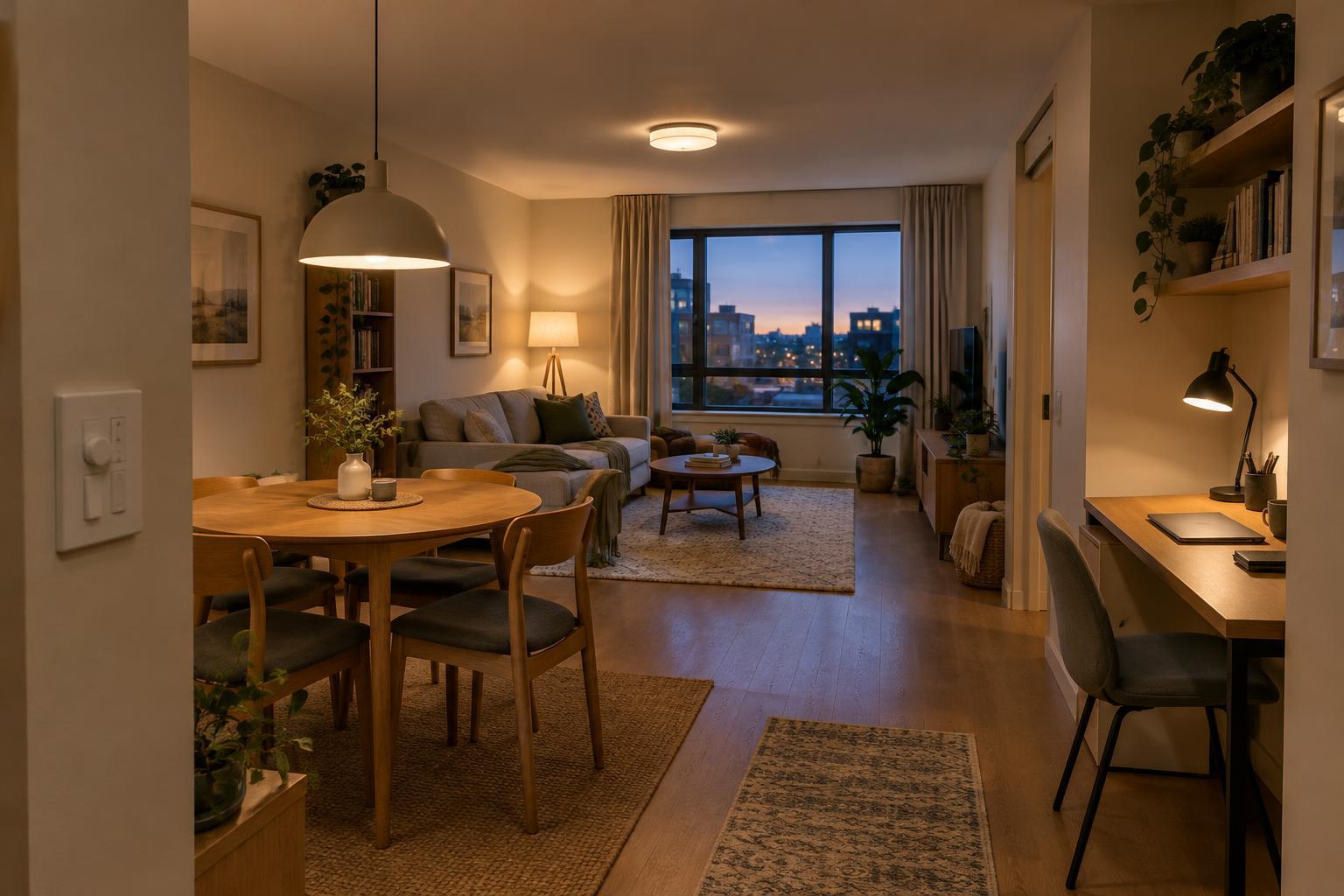
For example, a combined dining and living room might have a ceiling light on one control, a pendant over the table on another and a floor lamp beside the sofa on a third. Dinner can use the pendant with gentle background light; reading can use the floor lamp without lighting the table. Aim for a small number of meaningful groups rather than a separate switch for every fitting. Too many choices can make a room harder to use.
Put everyday controls where people need them
A control plan should make sense when someone enters the room for the first time. Put the main way to turn on usable light near the usual entrance. In a room with two common entrances, consider how someone will turn lights off at the exit they actually use. A bedside, sofa-side or desk lamp should be easy to operate from the position it serves, rather than requiring a walk across a dark room.
Decide which lights should respond to a wall switch and which can remain independent lamps. A switched outlet or plug-in control may be useful for a lamp, but check how it behaves after power is turned off and on; some electronic lamps do not automatically return to their previous setting. Labeling unfamiliar switches discreetly can also help in a room shared by guests or household members.
Use dimming and presets to simplify changes
Dimming can make one group useful at several times of day, especially general or dining light. It cannot, however, aim light at a task or prevent glare on a screen. Use it alongside well-placed fixtures rather than as a substitute for them. If you plan to dim LED bulbs or integrated fittings, check that the light source and dimmer are compatible; mismatched components may flicker or have a limited dimming range.
For a room with repeatable routines, think in simple settings: a bright setting for cleaning, focused light for work and lower background light for relaxing. These can be created manually with a few switches and lamps. Smart bulbs or controls can offer saved presets, but they are most helpful when everyone can still find an obvious way to turn the lights on. Avoid making a phone app the only convenient control.
Choose a plan that fits the room and your budget
Renters can start with portable lamps, compatible plug-in dimmers or smart bulbs where the existing fixture permits them. Choose lamp positions and cable routes that do not create trip hazards, and keep the room’s existing switches usable. These changes are relatively easy to test: live with a setup for a week and notice which lights you reach for, which you ignore and where darkness remains a nuisance.
Homeowners planning new wiring have a chance to decide control groups and switch locations before finishes go in. Walk through the proposed layout as if entering, working, relaxing and leaving the room. Note where a hand naturally reaches for a control and which lights should work together. Electrical alterations and device compatibility should be reviewed by a qualified professional. Whether the solution is a single new lamp or a larger renovation, the goal is the same: make the right light easy to use at the right moment.


