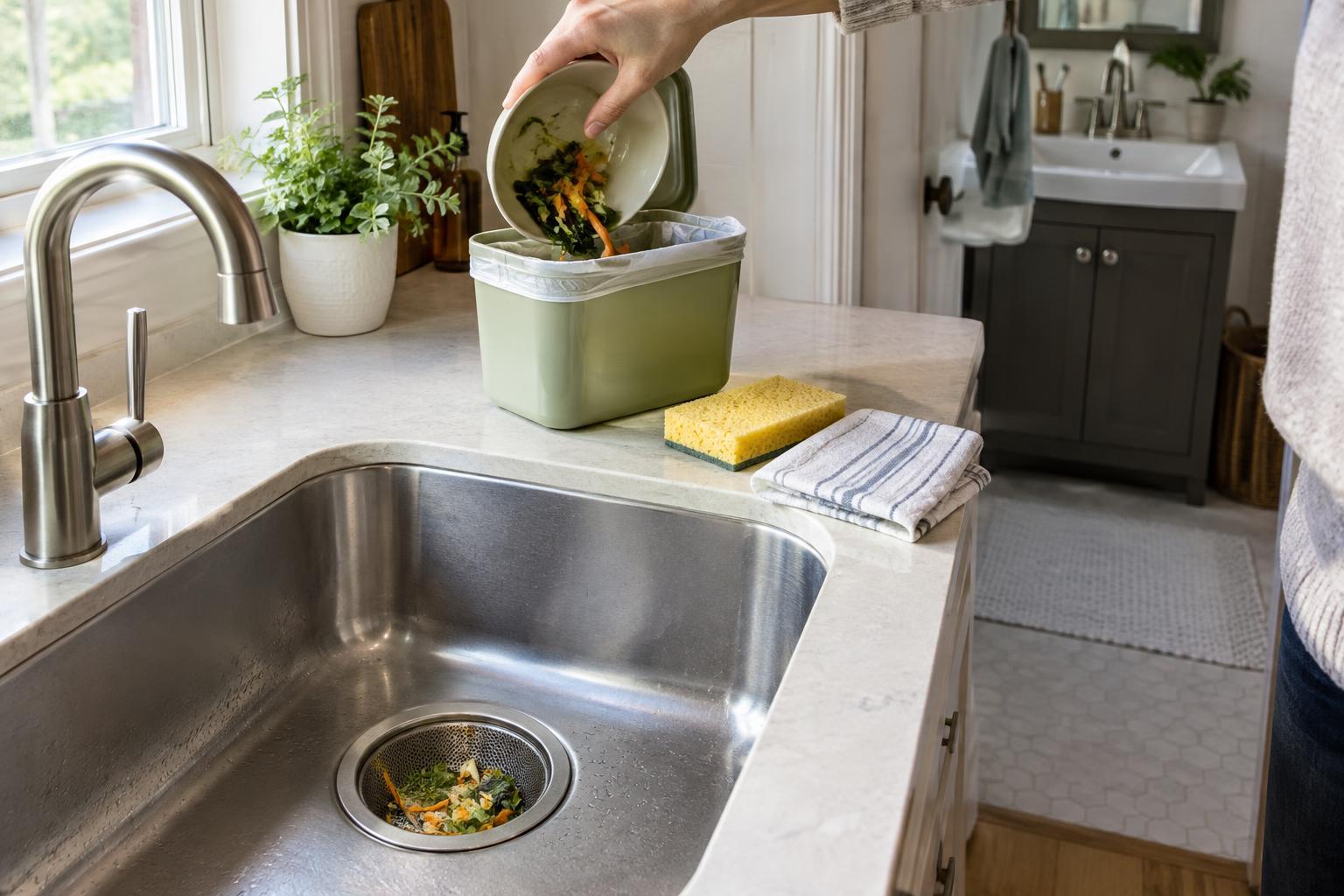
Keep the main sources of clogs out
The most reliable way to prevent a clog is to stop solid material before it enters the drain. In the kitchen, scrape plates and pans into the bin or food-waste collection before washing them. Use a sink strainer to catch rice, vegetable peels and other small scraps, and empty it regularly. A garbage disposal can break up some food waste, but it does not make the drain a good place for large amounts of scraps.
Keep cooking oil, fat and grease out of the sink. They may pour easily while warm but can cling to pipes as they cool, trapping other debris. Let small amounts cool and place them in the bin in a suitable container; follow local collection rules for larger amounts. Wiping a greasy pan with a paper towel before washing it also reduces what goes down the drain.
In bathrooms, hair is often the easiest material to intercept. Fit a drain cover or hair catcher that suits the shower or bath, then clear it after use. Avoid washing cotton pads, dental floss and other solid items down a basin drain. Even products that seem small can snag on residue inside a pipe.
Build a light cleaning routine
A quick check is more useful than waiting for water to stop draining. Empty strainers, lift hair from drain covers and remove visible debris from sink stoppers. Bathroom pop-up stoppers can collect a surprising amount of hair and soap residue just below the surface. If yours is designed to lift out, clean it according to the fixture’s instructions and put it back securely.
After washing greasy dishes, run warm tap water for a short time to help move remaining soap and residue through the nearby pipe. This is a supporting habit, not a way to dispose of grease. Avoid pouring boiling water into a drain as a routine treatment, particularly if you do not know the pipe or fitting materials. A little regular attention is generally easier than trying to clear a heavy buildup later.
Respond early when water slows down
Slow drainage is a useful warning sign. First, check and clean the visible strainer or stopper. If that does not help, a small drain snake or hair-removal tool may pull debris from a bathroom drain near the opening. Wear gloves, work gently and avoid forcing a tool around a bend. For a sink, a plunger made for that fixture may help shift a minor blockage when used correctly.
Some clogs collect in the curved pipe beneath a sink, called the trap. A homeowner comfortable with basic maintenance may be able to clean an accessible trap after placing a bucket underneath and checking how the fittings come apart. Do not loosen connections you cannot confidently reseal. If you rent, check your lease or ask your landlord or building manager before taking plumbing apart.
Avoid relying on chemical drain cleaners as routine maintenance. They may not remove the material causing a persistent clog, and the contents of a blocked pipe can be hazardous to handle afterward. Never mix drain products with each other or with other cleaners. If you have already used a chemical product, tell anyone who may work on the drain.
Know when the problem needs more than cleaning
A single slow sink with visible debris near its opening is different from several fixtures draining poorly at once. Repeated clogs, water backing up elsewhere, leaks beneath a sink or persistent sewer-like odors can point to a problem beyond the stopper or trap. Arrange for a qualified plumber or your property manager to assess those signs rather than repeatedly treating the drain yourself.
The simplest prevention plan is also the easiest to maintain: catch scraps and hair, dispose of grease separately, clean accessible covers and stoppers, and pay attention to changes in drainage. These steps will not prevent every plumbing problem, but they can reduce everyday buildup and help you notice a developing blockage while it is still manageable.


