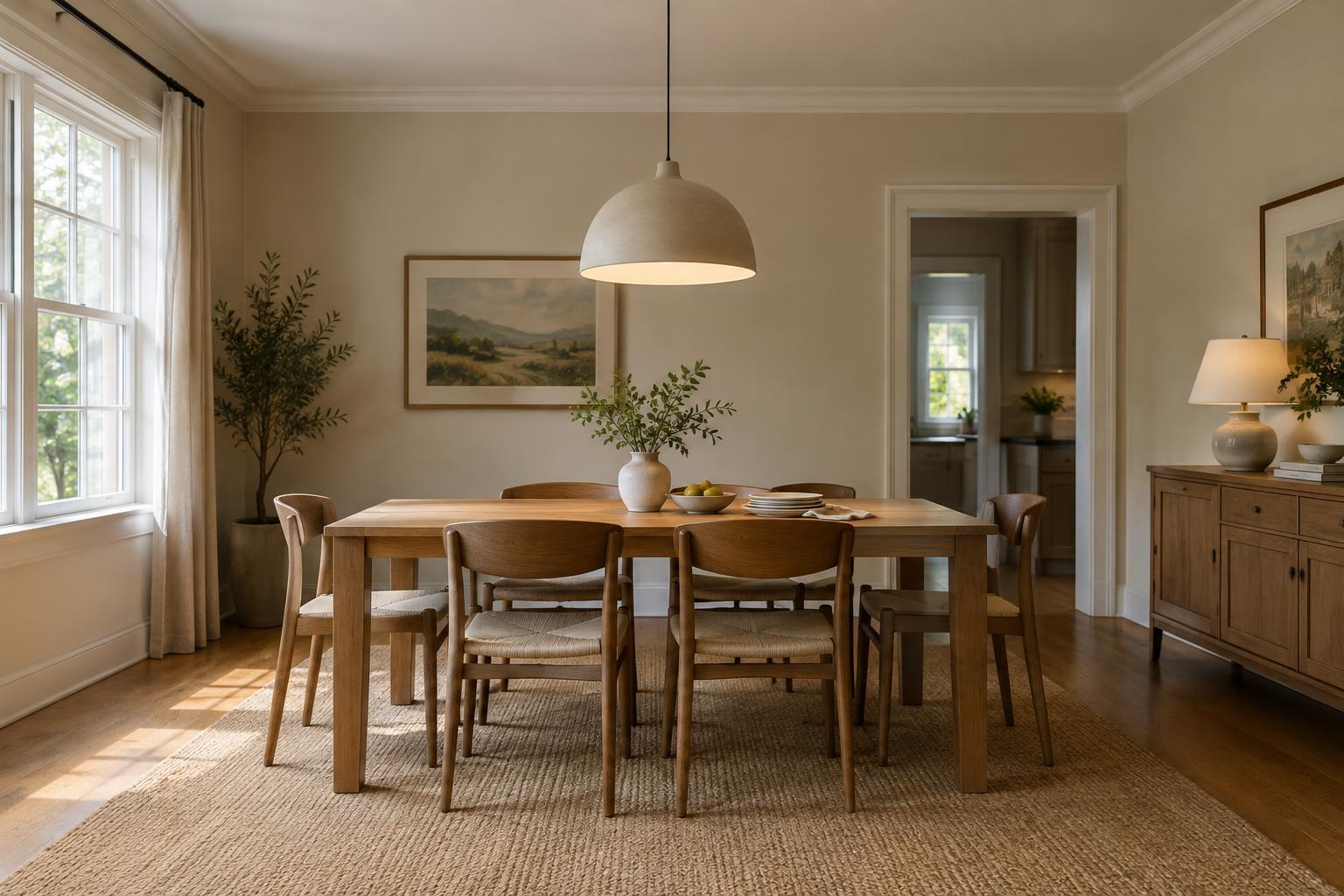
Start with the table
A dining pendant belongs visually to the table beneath it. Before shopping, measure the tabletop’s length and width, then note where the table normally sits. If you extend it only for occasional gatherings, size the light for its everyday arrangement. If the table is often moved, consider whether a fixed pendant will still make sense or whether a more flexible lighting plan would serve you better.
As a starting point, look for a fixture roughly one-half to two-thirds the width of the table. For a round table, that can mean a single pendant with a diameter in the same general range. For a long rectangular table, a linear fixture can relate to the table’s length without stretching all the way to its ends. These are visual guides, not rules: a light, open frame may look appropriate at a larger size, while a dense shade may feel imposing even when its measurements seem modest.
Set a height you can live with
A useful first test is to place the bottom of the pendant about 30 to 36 inches above the tabletop. From there, adjust for the fixture and the people using the room. Seated guests should be able to see one another across the table without looking around the light. Someone standing nearby should not feel that the fixture is uncomfortably low.
A tall ceiling does not always call for a much higher pendant. The aim is to keep the light connected to the dining area rather than stranded near the ceiling. If a shade is large or visually solid, hanging it toward the higher end of the range may preserve clearer sightlines. If the table sits beneath a sloped ceiling, check the height from the tabletop to the fixture itself rather than relying on the length of its cord or rod.
Center it over the dining area
In most rooms, position the pendant over the center of the table, even if the table is not centered in the room. This makes the lighting feel intentional and puts it where meals, games and other table activities happen. Check the arrangement from the doorway and from each seat before settling on a location; a fixture that looks centered on a floor plan can feel slightly off when viewed in the room.
Keep the pendant’s outer edges comfortably within the table’s edges. That helps distinguish the dining zone from the walking space around it and reduces the chance of someone brushing against the fixture. If an existing ceiling outlet is not over the table, first see whether shifting the table is practical. If it is not, a suitably designed swag pendant may offer a solution. Moving a hardwired ceiling connection is work for a qualified electrician.
Decide between one fixture and several
One pendant often gives a round or compact table a clear focal point. Over a longer table, a linear pendant or a small group of matching pendants can spread light more evenly. When using several, treat them as one composition: center the group over the table, place the outer fixtures in from the table ends, and keep the spacing between them consistent.
Proportion matters more than filling every inch above the tabletop. Two modest pendants may suit a narrow table better than three crowded ones. If the fixture has multiple shades, check where each bulb will sit in relation to diners’ eyes and plates. A drawing made to scale—or paper circles held up to suggest shade sizes—can reveal problems before you buy.
Test the light as well as the look
The right dimensions will not rescue a fixture that produces uncomfortable light. Opaque shades usually direct more light onto the table, while translucent shades may brighten the surrounding room as well. Exposed bulbs can add sparkle but may cause glare when they sit near eye level. Consider a compatible dimmer if you want brighter light for practical tasks and a softer setting for meals.
A pendant rarely needs to light the entire dining room by itself. Wall lights, lamps or other ambient lighting can soften shadows beyond the table and make the room more welcoming. Before final installation, mark the proposed fixture size and hanging height with a temporary template. Sit down, stand up and walk around the table. Those simple checks are often more useful than any single sizing formula.


