Start with where you use each supply
Convenient storage does not mean putting every product in one cupboard. Start by listing what you use in each area: laundry detergent near the washer, bathroom cleaner near the bathroom, and a small set of general-purpose supplies near the rooms you clean most often. Keep only what fits comfortably in each location. A crowded cupboard makes it harder to find a product and easier to knock something over.
Separate everyday supplies from occasional ones. A caddy for cloths, a brush and the cleaners you use regularly can make routine cleaning quicker, while spare bottles can live in a designated storage area. If you carry a caddy between rooms, put it away after use rather than leaving it on the floor or a counter. In a small home, one well-organized cupboard may work better than several scattered spots.
Make safe access the first constraint
Choose storage that children and pets cannot easily access. A high shelf may help, but it is not a substitute for a secure cabinet where climbing or reaching is possible. Consider a lock or latch suited to the cabinet and check that it closes properly. Laundry detergent packets deserve particular care: store them in their original closed container, out of sight and reach, and put the container away immediately after each use.
Keep products in their original containers with labels intact so that instructions and warnings stay with them. Do not pour cleaners into drink bottles or unmarked jars, even to save space. Follow each product’s label for storage, use and disposal. Never mix cleaning products; combinations such as bleach with ammonia or acidic cleaners can release dangerous fumes. Keeping bottles closed and upright also reduces the chance of leaks and accidental contact.
Choose a location that protects the products
A useful storage spot is dry, reasonably ventilated and away from heat sources. Avoid a shelf where bottles could fall into food, dishes or personal-care items. If a laundry area is humid, check containers periodically for damage and keep cardboard packages off damp surfaces. Product labels may call for more specific conditions, so let those directions guide the final location.
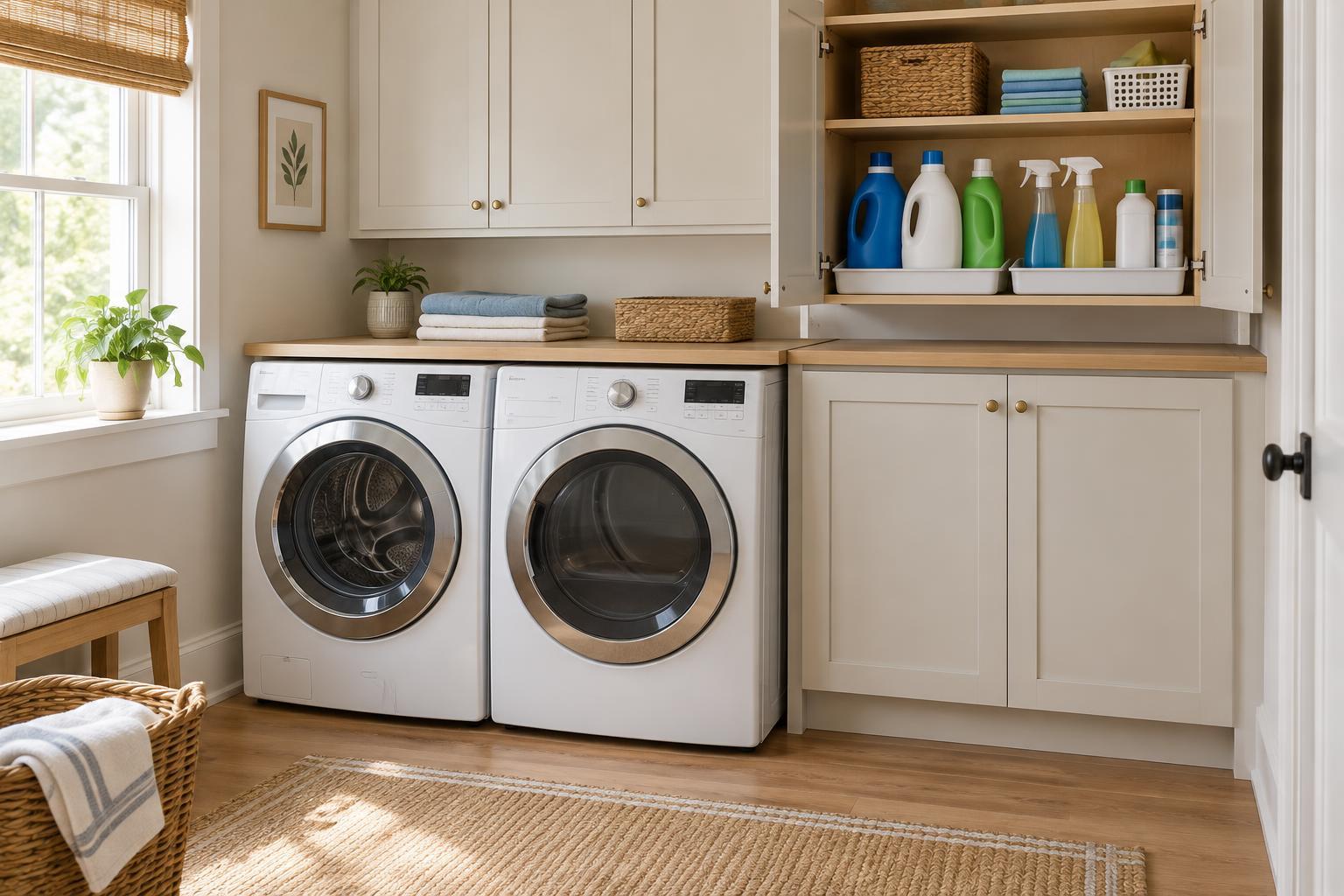
Inside a cabinet, a washable tray can catch small drips and make the shelf easier to clean. Use a separate bin for cloths and tools so they do not sit in leaked product. Avoid stacking heavy bottles above shoulder height; place them on a stable lower shelf within a secured cabinet instead. Store brooms, mops and buckets so they cannot tip into a walkway. The aim is a layout you can use without shifting several containers each time.
Give the laundry area a simple layout
Arrange laundry supplies in the order you use them. Keep detergent and stain-treatment products together, with measuring tools where you can find them. A nearby basket can hold mesh bags and other small accessories. If you decant a nonhazardous item such as clothespins into another container, label it; leave chemical products in their original packaging.
Leave enough space to set a basket down and open containers without balancing them on the washer. If the machine vibrates, avoid storing bottles on top where they might move or fall. Renters can often improve the area with a freestanding shelf or a removable organizer, provided it is stable and does not block access to the machine or its connections. Homeowners planning built-in storage can apply the same principle: easy access matters more than filling every inch.
Maintain the system with a quick check
A storage system works only if it stays usable. When you put supplies away, close caps, return bottles to their assigned spots and let reusable cloths dry before storing them. Periodically look for leaks, damaged packaging and products you no longer need. Follow the label and local disposal guidance rather than pouring unwanted chemicals together or into another container.
If a cabinet repeatedly becomes overcrowded, adjust the system instead of adding more bins. Buy fewer backups, move infrequently used tools to another appropriate spot, or reduce duplicates. The best arrangement is not necessarily the most elaborate one: it keeps supplies identifiable and secure while making ordinary cleaning and laundry tasks straightforward.


