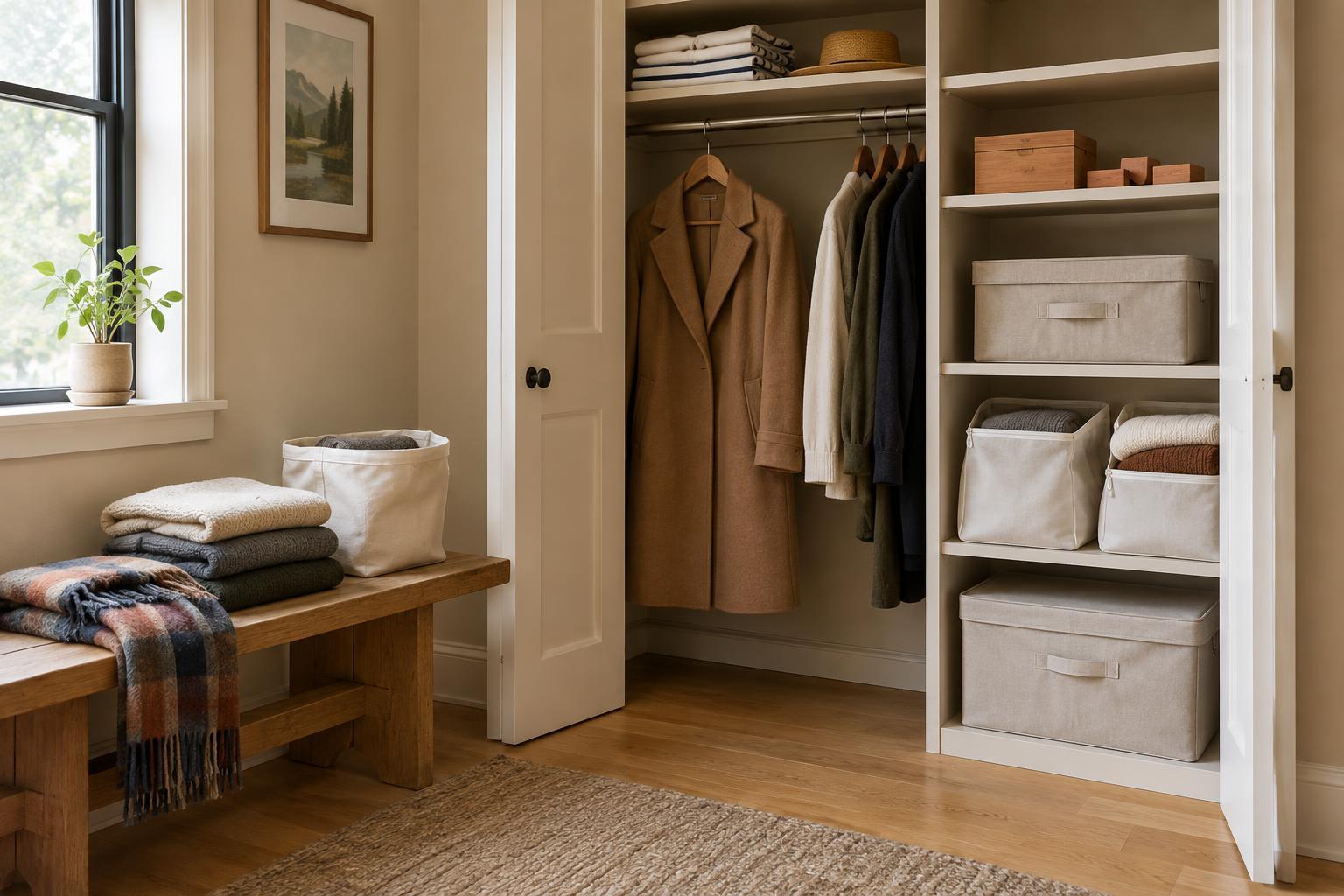
Start with clean, completely dry clothes
The best storage container cannot make up for clothing that goes into it dirty or damp. Wash or clean each item according to its care label, even if it looks ready to wear. Body oils, food marks and other residue can become harder to remove after months in storage. Empty pockets, check cuffs and collars, and deal with small stains before packing anything away.
Let clothes dry fully before folding or hanging them. If an item has been steamed, spot-cleaned or worn briefly, give it time to air out as well. While sorting, check for loose buttons, failing seams and worn elastic. A small repair now is easier than discovering it when you need the garment again.
Use the changeover to decide what is worth storing. Set aside clothes that no longer fit or that you do not expect to wear, rather than giving them space in a crowded box. Keep a few useful in-between pieces accessible if your local weather changes unpredictably.
Fold or hang according to the garment
Folding is usually the better choice for heavy knits, which may stretch if left on a hanger for a long time. Fold sweaters loosely along their natural lines and put heavier pieces at the bottom of a stack. Do not press so many items into a box that they emerge with stubborn creases or flattened details.
Structured coats, jackets and garments that crease easily may do better on supportive hangers, provided you have a suitable closet. Leave some space between them instead of squeezing them onto a crowded rail. A breathable garment bag can help keep dust off while still allowing air to circulate; avoid wrapping clothing tightly in plastic dry-cleaning covers for long-term storage.
For delicate fabrics, be guided by the care label and the garment’s construction. If a piece has embellishments, fragile trim or a shape that could be distorted, give it its own space. You can place clean, acid-free tissue between folds where extra support would help, but careful, loose packing matters more than buying special supplies for every item.
Choose containers that suit the storage spot
A lidded box keeps dust out and makes seasonal clothes easier to move. Clean, dry plastic bins are practical in many homes, especially where you want protection from incidental dust or splashes. Fabric storage bags can work well on dry closet shelves. Whichever you choose, do not pack clothes against a lid so tightly that the container strains to close.
Match the container to the location. A clean bedroom closet or under-bed space is generally preferable to a place with large swings in temperature or humidity. If a basement, garage or attic is your only option, check the area for dampness, leaks and pests before using it, and keep boxes off the floor where possible. A sealed box is not a solution for an already damp garment or storage area.
Skip strongly scented products if you want clothes to come out smelling neutral. If you use any pest deterrent, follow its label and keep it away from children and pets. The more dependable habits are to put away clean clothes, inspect the storage space and check stored items occasionally.
Make the system easy to find and use
Group clothing by season and type rather than filling boxes at random. One box for warm-weather tops and another for winter accessories is easier to search than a mix of both. Label the outside with a simple description, such as “winter knits” or “summer linen.” If boxes are opaque, a short list of contents can save you from opening several to find one item.
Place frequently needed pieces where you can reach them without moving the entire stack. This is especially useful for rainwear, extra layers or clothing needed for travel outside its usual season. In a small home, matching containers can make a high shelf or under-bed area look more orderly, but measure the space before buying them. The best system is one you can access without unpacking half the room.
Check stored clothes before bringing them back
When the season changes, open containers and inspect their contents before returning everything to the wardrobe. Look for moisture, unusual odors, pest activity, damaged seams and creases that need attention. Air out or clean items as their care labels recommend, then make any repairs before putting them into regular use.
Wipe and dry empty containers before refilling them with the next season’s clothes. This quick reset also gives you a chance to adjust the system: move a box that was difficult to reach, split one that was overfilled, or change a label that was too vague. Seasonal storage works best as a simple routine, not a one-time packing project.


