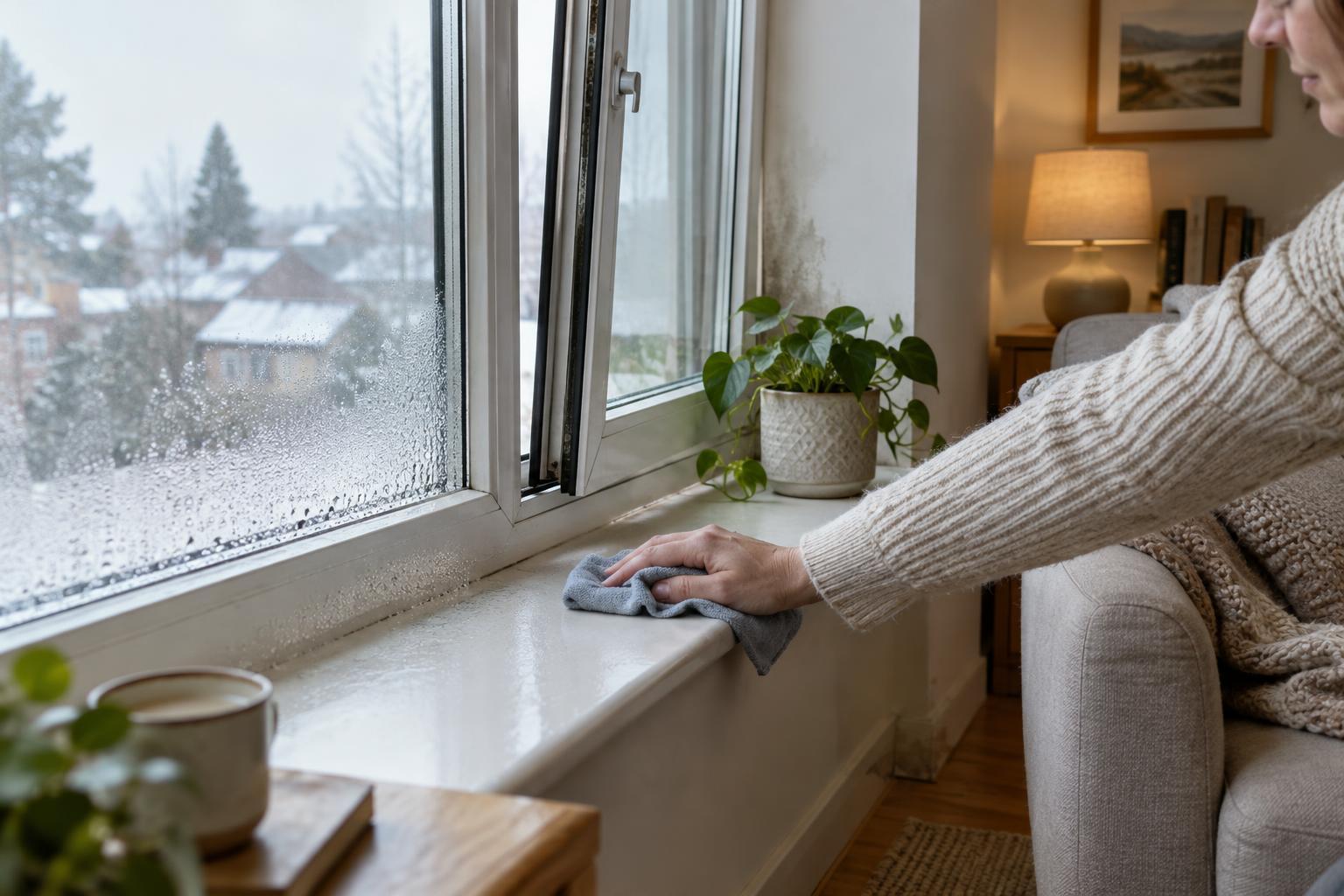
Understand where moisture meets a cold surface
Indoor air carries moisture from showers, cooking, laundry, breathing, and damp materials. When that air touches a surface cold enough for water to form, condensation appears. Window glass is an obvious place to spot it, but exterior walls, corners, pipes, and the space behind furniture can also collect moisture. If a surface stays damp, mold may begin to grow.
Condensation is not the only cause of a damp patch. A plumbing leak, roof defect, or water entering around a window needs a different repair from moisture caused by everyday activities. Notice when and where the dampness appears: water after a shower points toward ventilation, while a patch that grows after rain may indicate water entering from outside. Treat a persistent stain, soft material, or dripping pipe as a possible leak rather than trying to solve it with a dehumidifier alone.
Watch for patterns, not just a single reading
A small hygrometer can show how indoor humidity changes during the day. Place it away from a shower, stove, radiator, or open window so it gives a more useful picture of the room. Check it at different times and compare rooms. A consistently damp bedroom may need a different approach from a bathroom that becomes humid briefly and then dries.
Your windows and walls provide clues too. Occasional condensation during cold weather can occur even in a well-kept home. Repeated wet glass, water pooling on a sill, a musty smell, or dampness behind a wardrobe deserves attention. Wipe up visible water and inspect nearby paint, trim, and furnishings. The aim is to find out whether moisture is being produced faster than the room can remove it, or whether a particular surface is unusually cold.
Remove moisture close to its source
Use a bathroom exhaust fan while showering and leave it running afterward until the room has begun to dry. If there is no fan, opening a window can help when outdoor conditions allow it. Keep the bathroom door closed during a shower if opening it would send steam into cooler rooms. Wipe down surfaces that remain wet, especially around the tub and window.
In the kitchen, use an extractor that vents outdoors if one is available. Covering pans when practical and clearing steam after cooking can also help. Avoid drying laundry indoors when another option is available; if you must, choose a ventilated room and allow space around the items. Check that a clothes dryer vents as intended and that its duct is not obstructed. Venting moist air into an attic or other enclosed space merely moves the problem.
Fix dripping taps, leaking pipes, and appliance faults promptly. These repairs matter more than masking a damp smell. After a spill or leak, dry affected materials thoroughly and check whether water has reached flooring, wall cavities, or items stored against the wall.
Help rooms dry without making them uncomfortable
Ventilation works best when moisture has a route out of the home. Use working exhaust fans, keep vents clear, and open windows for a short period when the weather and outdoor air make that useful. In humid weather, bringing in more outdoor air may not improve an already damp room. Air conditioning or a dehumidifier may help in that situation, provided the equipment is sized and used appropriately.
Give air room to circulate around vulnerable surfaces. Pull large furniture slightly away from cold exterior walls, avoid packing closets tightly, and check corners that rarely receive airflow. Keep rooms reasonably and consistently heated in cool weather; a very cold room is more likely to have surfaces where condensation forms. If you use a dehumidifier, empty and clean it according to its instructions. It can manage moisture in the air, but it cannot repair a leak or remove mold growing inside a wall.
Respond to mold and recurring dampness
If you find a small patch of surface mold, address the moisture source first. Cleaning a spot without changing the conditions that kept it wet is unlikely to provide a lasting solution. Follow the cleaning guidance for the affected material and product, ventilate the area, and avoid painting over visible growth. Porous materials that remain wet or damaged may need replacement rather than repeated surface cleaning.
Seek qualified help when mold is extensive, repeatedly returns, or appears to be coming from a hidden cavity. The same applies to significant water damage or a leak you cannot locate. If you rent, document the pattern with notes and photos and report suspected building defects to the property manager or landlord. For any home, a simple routine of checking damp-prone places, maintaining fans and vents, and acting quickly on leaks is more useful than waiting for a musty smell to signal a larger problem.


