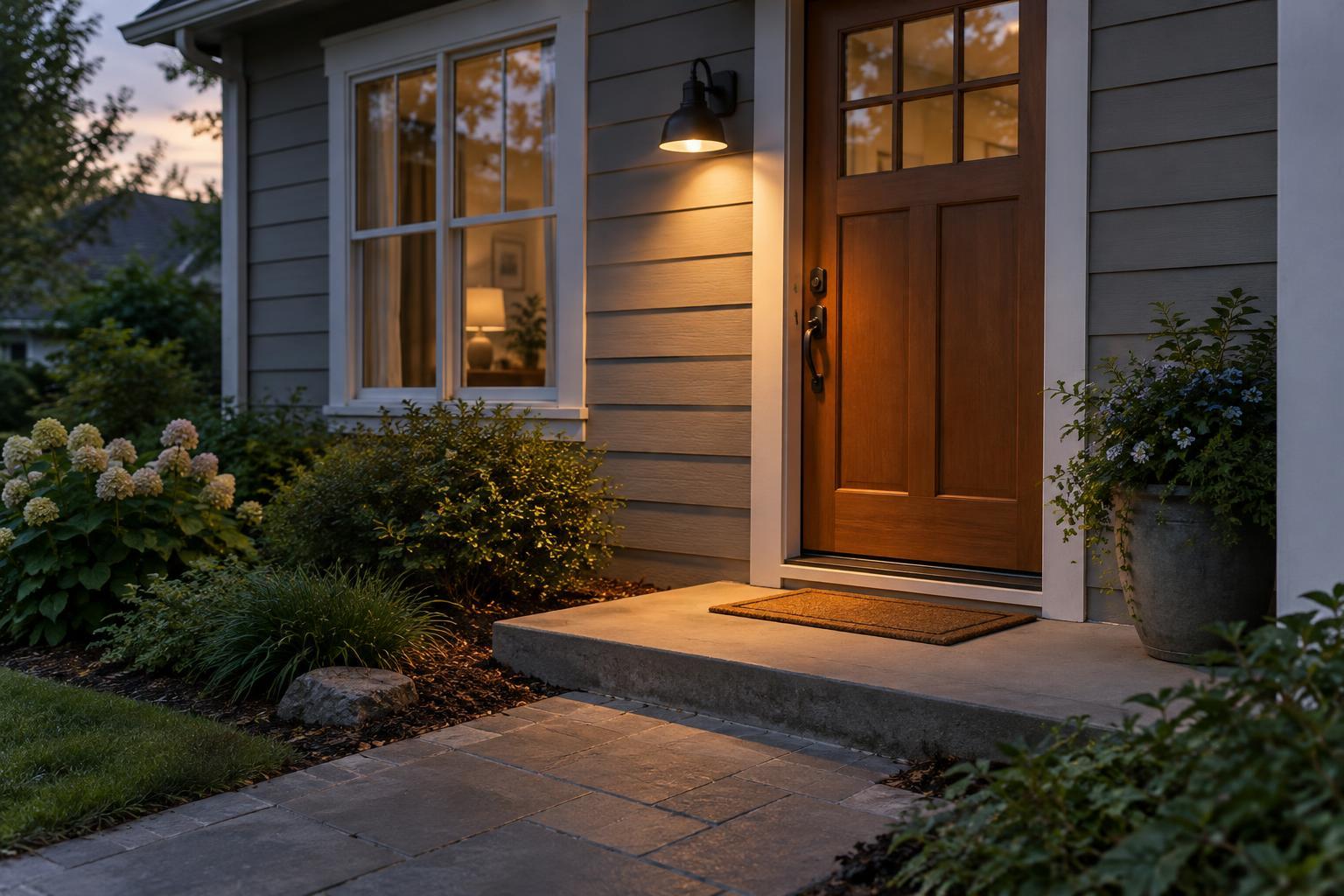
Start with the route to the door
Before choosing a fixture, walk toward your entry as a visitor would. Notice where someone first looks for the door, where the route turns and where a step, uneven surface or change in level might be hard to see. Entry lighting works best when it helps people read that sequence rather than illuminating only the wall beside the door. Stand at the gate, driveway or path entrance after dark if you can, and check what is already visible from streetlights or other exterior lights.
Aim for a comfortable transition from the approach to the threshold. A very bright porch surrounded by darkness can make the rest of the route feel harder to navigate. If the path is long, a modest light along the route may do more useful work than increasing the brightness at the door. Keep light directed toward walking surfaces and useful landmarks, rather than outward toward people approaching.
Place light where entry tasks happen
At the doorway, people need to recognize the entrance, find a handle or lock, and set down a bag or package. A wall-mounted fixture beside the door can serve these tasks when its light reaches the handle and landing. If there is room on both sides, paired fixtures may give a broad, even effect; a single well-placed fixture can also work. Check the result with the door both open and closed, since the door or an overhang may block light in one position.
Pay particular attention to steps and the edge of a raised landing. Light should make those surfaces legible without hiding them behind deep shadows. A fixture directly overhead may brighten the doorstep but leave a person’s face or the lock in shadow. A side light, or a combination of gentle overhead and side lighting, can be more comfortable. The useful position depends on the shape of the porch, the direction the door swings and where people normally stand.
Control glare before adding brightness
A visible bare bulb can feel harsh even when the ground below remains poorly lit. Look for a fixture that shields the lamp from common viewing angles and spreads light onto the surfaces you want to see. At a covered entry, check the view from under the canopy as well as from the path. Aiming a light downward can help, but avoid a narrow beam that creates one bright spot and leaves the steps beside it in darkness.
Nearby windows and neighboring entries matter too. Light spilling into a bedroom or directly across a shared walkway may be distracting. Move the fixture, change its aim or choose a more shielded design before reaching for a brighter bulb. A softer appearance usually comes from balanced coverage and restrained brightness, not from making every surface equally bright. Dark doors and deep porches may need more careful placement because they reflect less light.
Match the fixture to the space
Fixture size affects comfort and usefulness. A tiny light on a tall, recessed entry may disappear visually and leave the landing dim; an oversized fixture on a narrow passage may feel intrusive or sit in the way. Consider the available wall space, door trim, roofline and clearance for people carrying bags. A simple mock-up made from paper or cardboard can help you judge proportions from both the path and the doorstep before committing to a location.
Choose a fixture intended for the exposure it will receive, especially if wind-driven rain can reach it. Also consider how easily you can clean the shade and replace a lamp if the design allows it. Dirt and insects can reduce useful light over time. For renters, a plug-in or portable option may offer a less permanent improvement where it can be used safely and without creating a trip hazard; check any property rules before making changes.
Test the lighting in real use
Once a light is installed, test it from several positions after dark. Approach from the usual route, pause on any steps, unlock the door and look back toward the path. If you find yourself shielding your eyes or casting a shadow over the lock, placement or aiming may need adjustment. Ask someone else to approach while you watch from inside, too: this can reveal unwanted light through a window or a patch of glare you missed.
Controls should suit how the entry is used. A timer, sensor or switch can help ensure light is available when needed, but each should be set so the route remains visible for the time it takes to reach the door. For new wiring or changes to existing electrical fittings, use a qualified professional where required. The goal is not the brightest entry on the block; it is an approach that feels clear, welcoming and easy to use.


