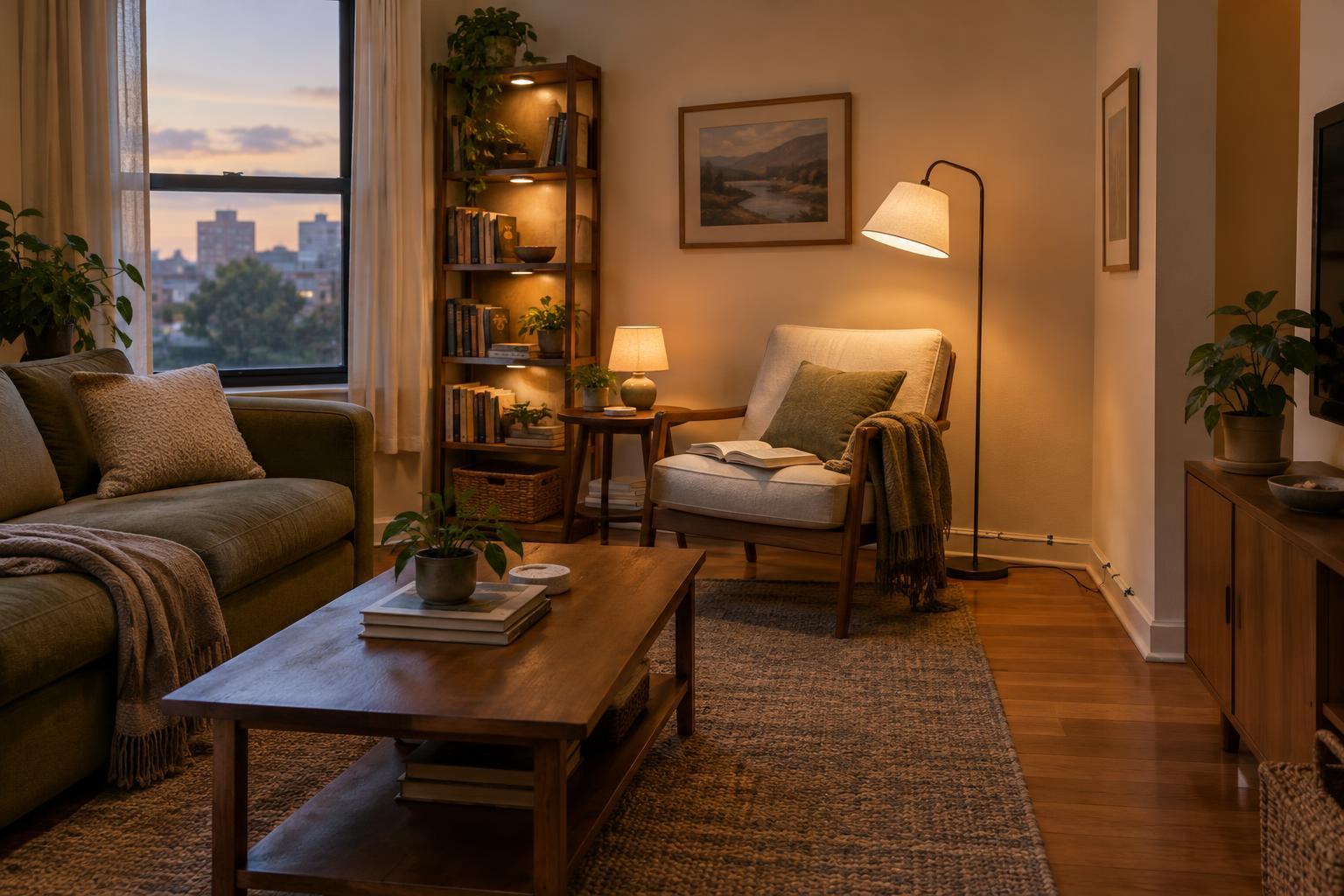
Start with the light you need
A ceiling fixture can illuminate a whole room yet still leave the sofa, desk or kitchen counter in shadow. Before buying another light, notice where you read, prepare food, get dressed and move through the space after dark. Those activities call for different kinds of lighting: focused task light where you work, softer ambient light for general comfort, and a small amount of accent light if you want to draw attention to a shelf or corner.
Choose one or two problem spots first rather than trying to light the entire home at once. A floor lamp beside a chair may be more useful than a decorative lamp across the room. If an outlet is nearby, a plug-in light is usually the simplest choice for a place you use every day. Battery-powered lights are helpful where a cord would be awkward or where you only need light briefly.
Put plug-in lights where they can do real work
Portable lamps give renters a lot of control without changing a fixture. A table lamp can brighten a bedside surface or entry console; a floor lamp can serve a seating area without taking up tabletop space. An adjustable desk lamp lets you aim light at paperwork, crafts or a keyboard. In a room with one harsh overhead light, placing two lamps at different heights can make the space feel more even and comfortable.
Think about the shade as well as the lamp. An opaque shade directs more light up or down, while a translucent one spreads a gentler glow. For reading or detailed tasks, check that enough light reaches the page or work surface, not just the surrounding wall. If several lamps share a room, bulbs with similar color temperatures tend to look more coherent. Dimmable bulbs are useful only when the lamp and any connected control are compatible with them.
Plan cord paths before settling on a location. Keep cords away from walkways, doorways and chair legs, and do not run them under rugs. A removable cord cover can help along a suitable wall or floor edge, but it should not turn a poorly placed outlet into a reason to stretch a cord across the room. Follow each product’s instructions, and avoid overloading outlets or power strips.
Use battery lights for the hard-to-reach places
Battery-powered lights are most useful where wiring is absent and continuous light is unnecessary. A small rechargeable lamp can sit on a dining table or move between rooms. Motion-activated lights can make a dark closet or cupboard easier to use, while a compact puck light can illuminate a shelf. For a narrow entry, a battery wall light may provide a welcoming glow without requiring a table.
Consider how you will turn the light on and maintain it. A light that needs frequent charging may be frustrating inside a busy closet; one with an easy-to-reach switch or motion sensor may suit that spot better. Check the product’s expected use and charging instructions rather than assuming every rechargeable light will work well for long evening sessions. Keep spare batteries stored as directed, and dispose of spent batteries through an appropriate local collection option where available.
Mount temporary lights with the surface in mind
Not every removable mount is safe for every rental finish. Adhesive strips can pull paint from weak or recently painted surfaces, and textured walls may not hold them securely. Read the light’s mounting instructions and weight limits, test an inconspicuous area when practical, and remove adhesives as directed. Before making holes or replacing any existing fixture, check your rental agreement and ask for permission if needed.
You can often avoid wall mounting altogether. Choose a light that clips to a sturdy shelf, sits on a cabinet, or stands on the floor. Where a portable light might be bumped, place it on a stable surface away from the edge. Keep lamps and their cords clear of fabric, water and other conditions the manufacturer warns against.
Make the arrangement feel intentional
Portable lighting looks more cohesive when each piece has a job. In a living room, you might pair a floor lamp for reading with a shaded table lamp for softer evening light. In a bedroom, two small bedside lamps can balance the room even if only one is used for reading. A battery light inside a closet can then solve a separate practical problem without needing to match the visible lamps.
Work with what you already own before adding more. Move a lamp closer to the activity it serves, try a different shade or suitable bulb, and see whether the room still has a dark area that matters. For renters, the best lighting plan is one you can use comfortably now, maintain without fuss and take with you when you move.


