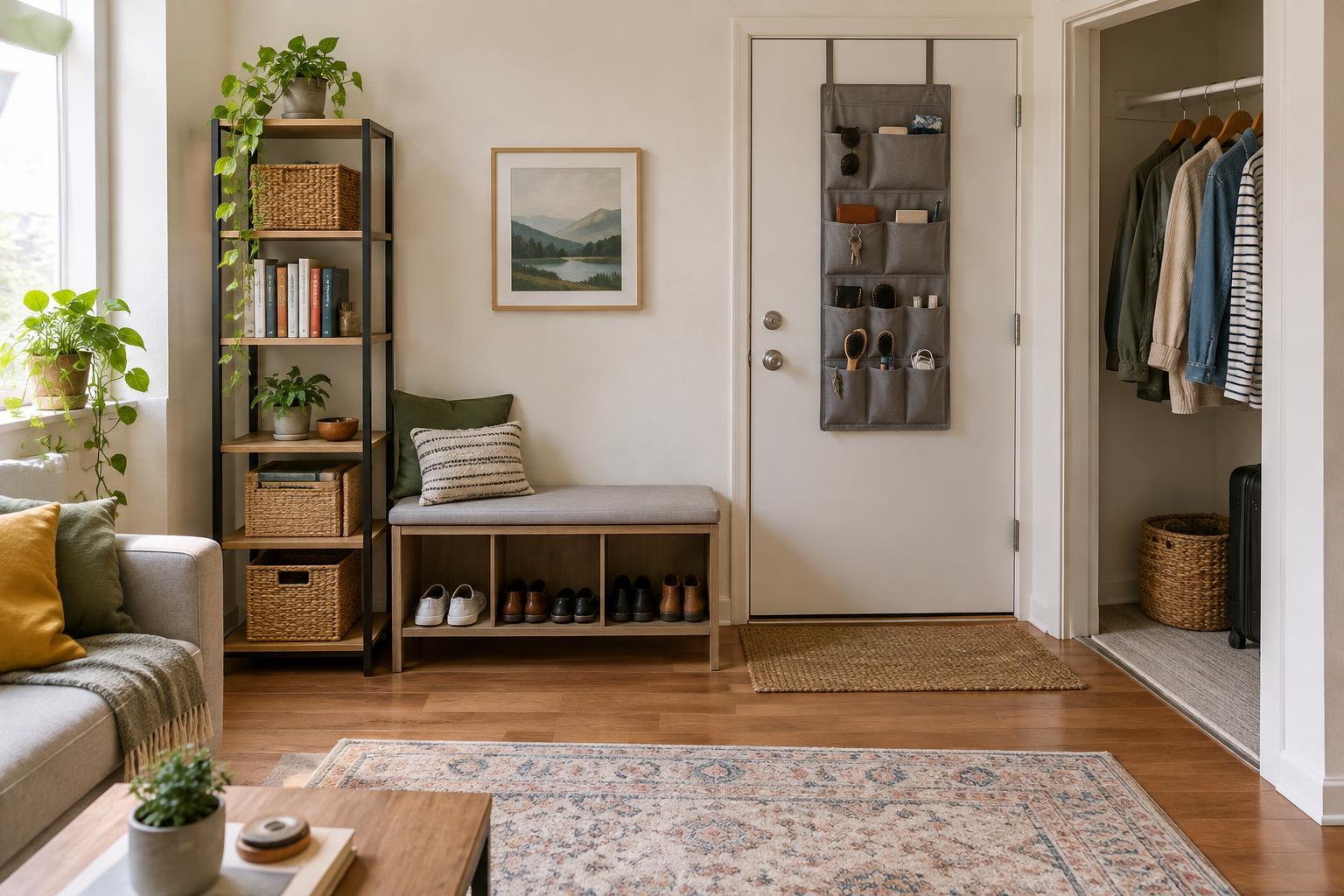
Start with the space you already have
Before buying organizers, identify what needs a home and where you use it. A basket for shoes near the entrance is more useful than one across the room; a tray for cooking tools belongs near the work surface. Measure the available floor area, door clearance and shelf depth, then sort belongings by size and frequency of use. This helps you add storage where it will solve a specific problem rather than filling every gap with containers.
In a rental, it also helps to distinguish between spaces you can use freely and surfaces that need care. Lease terms may restrict attachments, and some painted or finished surfaces are easily marked. When in doubt, favor a solution that stands on the floor or sits inside an existing cabinet. Keep heavier items low and leave walking routes, vents and access panels clear.
Choose freestanding pieces that do more than one job
A narrow bookcase, rolling cart or small drawer unit can create useful capacity without touching a wall. Choose dimensions based on what it will hold: shallow shelves suit folded linens and pantry supplies, while drawers contain smaller items that otherwise make open shelving look crowded. Matching bins can bring visual order, but leave enough space to see or label their contents. Storage works best when putting something away takes little effort.
Look for pieces with a stable base and follow the manufacturer's guidance on loading and placement. Tall or top-heavy furniture may need wall anchoring to be used safely, particularly in homes with children or pets. If anchoring is not permitted, a lower, wider unit may be a better choice. For a living area, a storage ottoman or lidded bench can hide everyday items while providing another practical function.
Use doors and existing cabinets carefully
Over-door organizers can turn the back of a closet or pantry door into storage for light items such as accessories, cleaning cloths or packaged supplies. Check the gap above the door before buying one, and confirm that the door still closes without force. If the hooks move or rattle, removable protective pads may help, provided they are suitable for the finish. Avoid loading an organizer so heavily that it strains the door or hinges.
Inside cabinets, shelf risers make stacked items easier to reach, while pull-out baskets can bring supplies at the back into view. Small bins are useful for grouping toiletries, food packets or desk materials. These additions are easy to take with you when you move, and they keep storage changes largely out of sight. Measure around hinges, pipes and cabinet doors so the organizer does not interfere with normal use.
Treat tension and adhesive products as light-duty tools
Tension rods can support a lightweight curtain, separate a closet zone or hold a modest number of light accessories between solid, parallel surfaces. They depend on pressure, so an uneven opening or a slippery finish can make them unreliable. Check the product's stated limits, install it as directed and test it gently before putting anything underneath that could be damaged by a fall. Avoid using one for heavy belongings.
Adhesive hooks and caddies offer another option for small, frequently used items. Their grip and removal depend on the product, surface condition, humidity and installation method. Read both the weight guidance and the surface restrictions, and allow for any required curing time. Even a product described as removable can lift paint or leave residue, especially on delicate or poorly bonded finishes. Test an inconspicuous spot if the surface matters to you.
Plan for daily use and an eventual move
The most successful no-drill setup is one you can maintain. Put everyday items between waist and shoulder height where possible, reserve harder-to-reach spots for occasional use, and avoid stacking containers so tightly that you must move several to reach one. A small amount of empty space makes shelves easier to use and keeps the room from feeling crowded.
As you arrange each piece, check that doors open fully, furniture does not wobble and nothing blocks an exit. Keep packaging or removal instructions for adhesive accessories, and periodically check hooks, rods and organizers for slipping or wear. When it is time to move, unload everything before detaching it and follow the removal directions slowly. That final step is part of choosing genuinely renter-friendly storage.


