Start with the jobs you are likely to do
A beginner’s toolkit should suit ordinary tasks: tightening a loose handle, assembling furniture, hanging a lightweight picture, measuring for a shelf, or dealing with a dripping connection you can safely access. You do not need to buy equipment for every repair you might someday attempt. A compact kit that you can find and use confidently is more valuable than a crowded box of unfamiliar tools.
Before shopping, think about your home and your permission to work on it. Renters may need to report plumbing, electrical, or wall repairs rather than tackle them. Homeowners may have more freedom but still benefit from setting limits. Buy for small, repeatable jobs first, then add a tool when a specific project calls for it.
Choose a small set of dependable hand tools
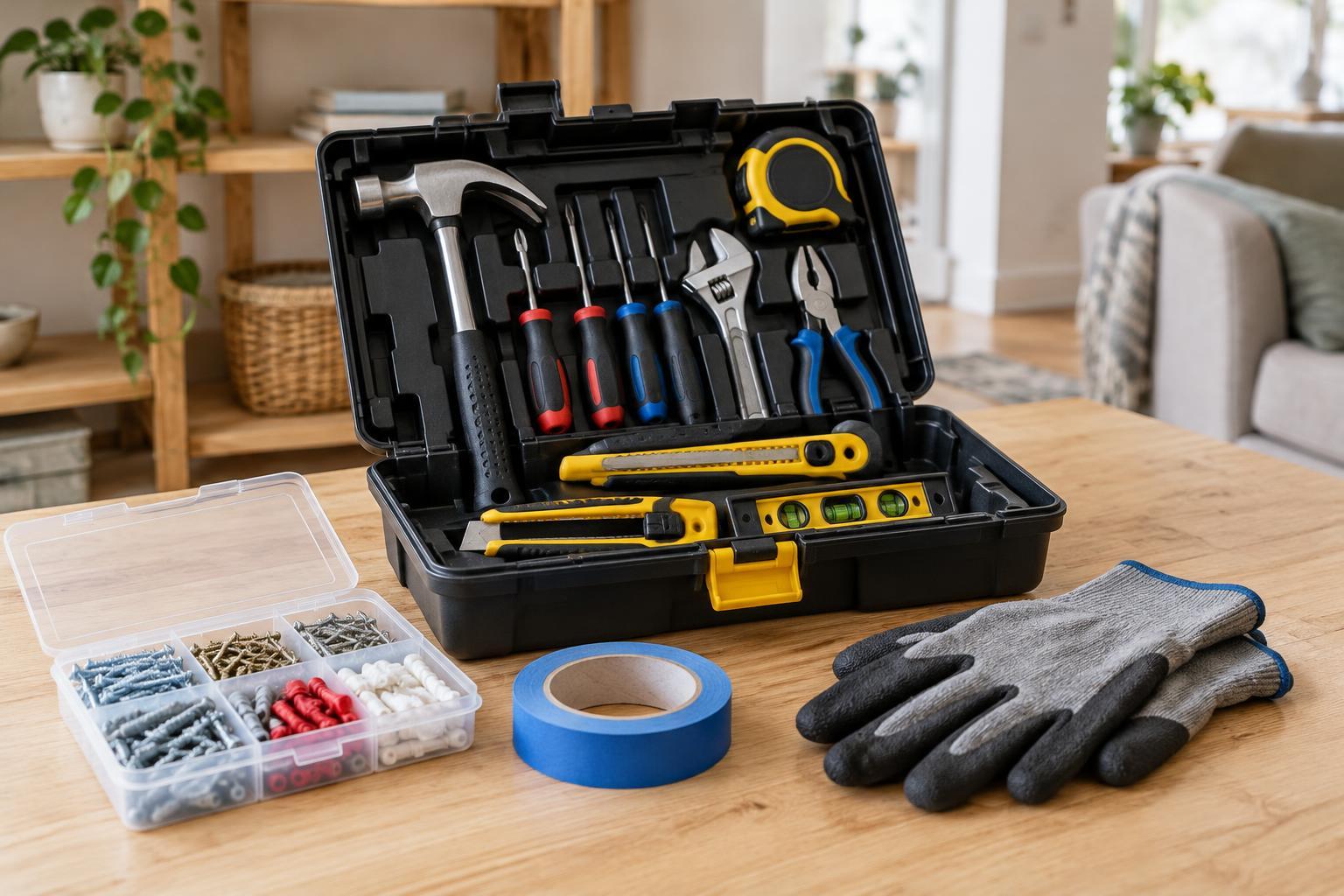
Begin with a tape measure, a medium claw hammer, and a screwdriver with a comfortable grip. A screwdriver that accepts interchangeable Phillips and flat-head bits saves space; include a few common sizes so the bit fits the screw snugly. Add a set of hex keys for flat-pack furniture and a pair of slip-joint pliers for gripping and turning small parts. An adjustable wrench helps with nuts and bolts when you do not yet need a full set of fixed-size wrenches.
A utility knife is handy for opening packaging and trimming material, but its blade needs a cover or a retractable mechanism. Keep spare blades safely contained. A small level makes pictures, hooks, and simple fittings easier to position. These tools cover many modest tasks without committing you to bulky or specialized equipment.
If you regularly assemble furniture or install permitted fittings, a cordless drill/driver may be a worthwhile next purchase. It is not essential on day one. When choosing one, prioritize a size you can control, a variable-speed trigger, and bits suited to the screws you expect to use. For occasional jobs, a manual screwdriver may be simpler and less likely to overdrive a screw.
Keep a few supplies that make tools useful
Tools alone will not finish many small fixes. Keep a modest assortment of screws, picture-hanging hardware, and wall anchors appropriate to the surfaces in your home. Different walls need different fixings, so check what the surface is made of and the fitting’s instructions before hanging anything heavy. Do not assume a generic anchor will hold a loaded shelf.
Painter’s tape, a pencil, and a small notepad help you mark positions without making a project messy. A flashlight or headlamp makes it easier to inspect the space under a sink or inside a cabinet. Work gloves and safety glasses are sensible for tasks that may produce splinters, chips, or dust. A few clean cloths are useful for catching minor drips and wiping up after a job.
Skip large mixed boxes of fasteners unless you know you will use their contents. It is often easier to buy the exact screws or anchors needed for a planned task. Label any leftovers with their size and intended use so you do not have to guess later.
Make safe limits part of the kit
A basic toolkit is for maintenance, not for proving you can fix everything yourself. Stop if a task involves exposed wiring, an unknown pipe, a persistent leak, structural damage, or a fixture you cannot support securely. Switch off and unplug an appliance before working on removable exterior parts, and follow its instructions. If a job needs a ladder, make sure you can work from a stable position without reaching beyond your balance.
Knowing where the relevant shutoffs are can save time when a problem occurs. Locate your home’s water shutoff and electrical panel before an urgent repair is needed, and keep access to them clear. If you rent, keep your landlord’s or maintenance contact information with the kit. A note listing what you observed, where the problem is, and when it happens can make a repair request more useful.
Store everything so it stays ready
A lidded toolbox, sturdy tote, or dedicated drawer is enough for a starter collection. Give sharp tools a sheath or closed compartment, and keep small parts in labeled containers. Store the kit somewhere dry and accessible to adults, but out of reach of children. Return tools to the same place after each job; a complete small kit is easier to use than a larger one scattered through the home.
As you use the kit, note what you borrow repeatedly and what sits untouched. Add tools in response to real projects, not an imagined checklist. That approach keeps costs manageable and helps your collection grow alongside your skills.


