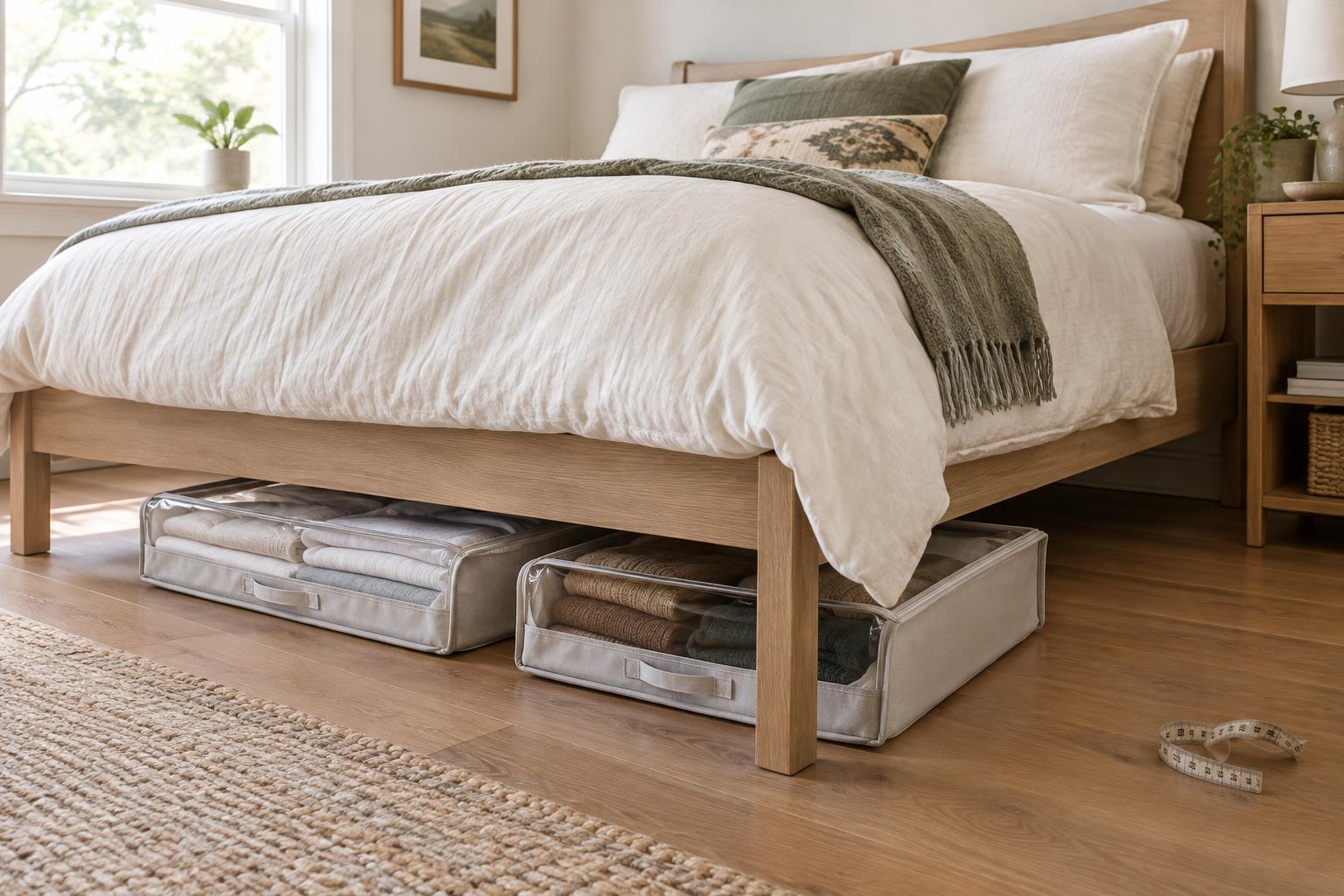
Start with the space you actually have
Under-bed storage works best as a planned extension of a closet, not a place to push things out of sight. Before buying containers, measure the clearance from the floor to the lowest part of the bed frame. Check the space across the full width of the bed: center supports, legs and uneven floors can reduce the usable area. Leave enough clearance for a container to slide out without scraping the frame.
Think about which sides of the bed are accessible. A box that fits perfectly will be frustrating if a nightstand blocks it or the bed must be moved to retrieve it. Divide the space into zones: items needed several times a year can sit toward the middle, while frequently used items should stay near an open edge. If access is awkward, consider storing less beneath the bed rather than filling every inch.
Match the container to the contents
Low-profile lidded bins are a versatile choice for spare bedding, folded clothing and seasonal accessories. Clear sides make contents easier to identify; opaque sides look calmer if the space is visible from the room. Labels on the short ends are useful when several matching bins sit side by side. If dust is a concern, choose a lid that closes securely rather than an open basket.
Wheeled drawers suit beds with enough clearance and a smooth floor. They make heavier items easier to reach, though wheels may catch on thick rugs or floor transitions. Fabric zippered bags are lightweight and often fit shallow spaces, but they may offer less protection from dust, spills and pests than rigid containers. Vacuum bags can compress bulky textiles, but they are better for items that tolerate being compressed than for pieces whose shape or loft matters.
For a bed with very little clearance, risers may create useful space if they are compatible with the bed and its weight. A storage bed with built-in drawers or a lift-up base can provide a more integrated solution, but check how the bed opens and whether nearby furniture leaves room to use it. Renters may find removable bins simpler than changing the bed itself.
Choose items that can wait between uses
The best candidates are clean, dry things you need occasionally: an extra sheet set, guest blankets, off-season clothes, spare pillowcases or a small collection of seasonal decor. Group items by purpose so that retrieving one thing does not mean unpacking everything. Fold textiles loosely enough that you can see what is there, and avoid overfilling a container until its lid bows.
Under-bed space can also hold flat items such as a spare folding tray or a rarely used board game, provided they are protected from dust and easy to pull out. Keep everyday necessities elsewhere. If you have to kneel down and drag out a bin each morning, the storage location is working against your routine rather than helping it.
Know what should not go beneath a bed
Do not store damp laundry, wet shoes or anything that has not fully dried after cleaning. A closed container can trap moisture, while an open one exposes its contents to dust. If the room or floor tends to feel damp, address that condition before putting textiles beneath the bed; otherwise, use the space only for items less vulnerable to moisture.
Food, drinks and scented products are poor choices because spills and odors can be hard to notice under a bed and may attract pests. Keep cleaning chemicals, paints and other products with storage directions in an appropriate location, not beside bedding. Important documents, irreplaceable photographs and delicate keepsakes also deserve a place where they are easier to monitor and protect. Avoid stashing loose cables or objects that could snag when a container is pulled out.
Leave breathing room around vents, heaters and electrical equipment. Do not force bins against cords or block access to an outlet. If a container makes the bed unstable, interferes with a moving frame or prevents you from cleaning the floor, it is not a good fit for that spot.
Make the system easy to maintain
Before storing anything, clean beneath the bed and check for dust, moisture and obstacles. Put away only clean, fully dry items, and label containers by category rather than trying to record every object inside. A small number of well-organized bins is usually easier to use than a tightly packed patchwork of boxes and bags.
When you change bedding or rotate seasonal clothes, pull out the containers and reassess their contents. That is a chance to clean the floor, check for damage and return items to their proper places. Under-bed storage is most successful when it frees up accessible shelves and drawers without becoming a second, harder-to-reach clutter zone.


