Plan around the plumbing first
An under-sink cabinet is rarely a clean rectangle. Supply lines, a drain trap, shutoff valves, and sometimes a disposal or water filter divide the space into awkward pockets. Before buying an organizer, empty the cabinet and wipe it down. Note where pipes enter the cabinet, how far the trap projects, and which areas you need to reach for routine checks. Measure the usable floor space on either side of the plumbing, rather than relying on the cabinet’s overall width.
Keep valves, pipe connections, and any equipment controls visible and reachable. A storage setup that has to be dismantled before you can inspect a damp fitting is too complicated for this spot. If the cabinet already smells musty or has staining, swelling, or active moisture, address that issue before putting supplies back. Storage can help you notice a leak; it cannot fix one.
Choose pieces that can move out of the way
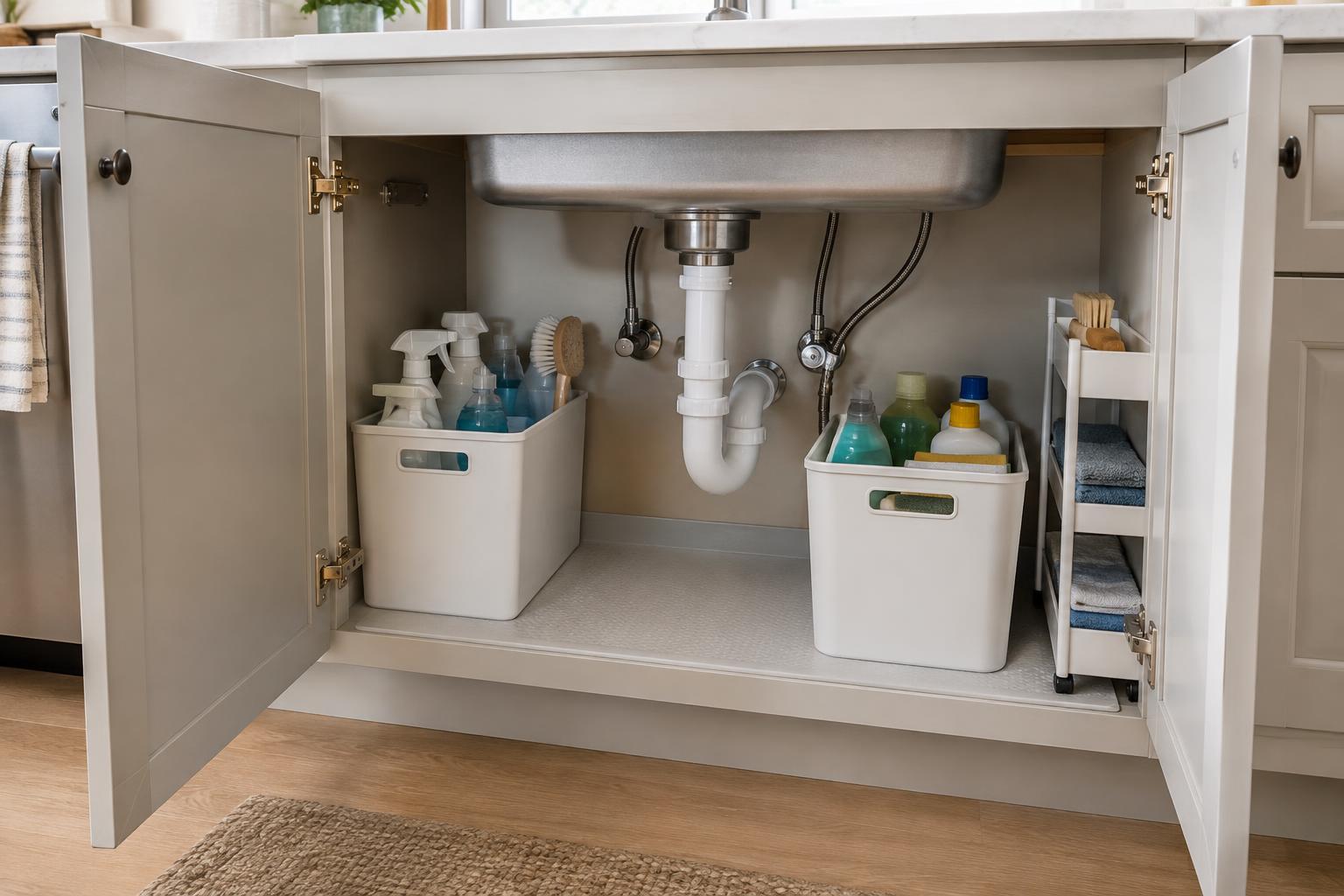
Use the open areas beside the pipes for small, removable bins or caddies. A handled caddy makes it easy to lift everyday cleaning supplies out in one motion. Shallow bins help keep sponges, cloths, and spare bags from drifting behind the drain. Clear or open-top containers make their contents easier to see, while labels are useful when several people share the cabinet.
Adjustable shelves and U-shaped organizers can fit around plumbing, but check their dimensions against your actual pipe layout. Avoid forcing a shelf against a supply line or placing heavy items where they could press on a fitting. A door-mounted holder may free up floor space for light items, provided it clears the pipes and contents when the door closes. Renters can favor freestanding pieces that do not require drilling; homeowners may prefer a fitted shelf if it still allows easy access.
Treat the cabinet floor as an inspection area
A removable tray or washable mat can catch small spills from stored bottles and make cleanup simpler. Choose one that fits without curling against the cabinet walls, and lift it periodically to check underneath. A tray may limit damage from a minor drip, but it can also conceal moisture if it is never inspected. Leave a clear view of the area beneath the trap and connections whenever practical.
Be cautious with absorbent liners or piles of spare cloths on the cabinet floor. They may hold moisture against the surface and make a slow leak harder to notice. If you use a liner, choose one you can remove easily and dry thoroughly. Keep stored items off any visibly damp area, and do not use an organizer to cover water stains you have not investigated.
Give each item a sensible place
Store the things used at that sink closest to the door: dish brushes and dishwasher supplies in a kitchen, or extra hand soap and cleaning cloths in a bathroom. Put occasional supplies farther back, but keep them in a container that pulls forward easily. Leave some empty space around the plumbing so you can see the cabinet floor and reach the shutoff valves without shifting a wall of bottles.
Check product labels before deciding what belongs under the sink. Keep cleaning products in their original containers, upright and closed, and away from children and pets. Do not crowd incompatible products together or store them where a leak could soak paper packaging. If the cabinet is too cramped to separate and secure supplies properly, move some of them elsewhere rather than trying to fit everything in.
Make upkeep part of the layout
A useful under-sink system should be quick to reset. Group related items so each bin has a purpose, and avoid stacking containers that must all come out to reach one bottle. When you replace a product, remove its empty container instead of pushing it to the back. This keeps the limited space usable and makes changes to the cabinet floor easier to spot.
Every so often, pull the bins out and look for drips, dampness, discoloration, or a new odor. Wipe up ordinary spills promptly and let the area dry before restocking it. If moisture returns or appears to come from the plumbing, stop treating it as a storage problem and arrange an appropriate repair. The goal is not to pack the cabinet perfectly; it is to keep useful supplies organized while leaving the sink’s working parts easy to see.


