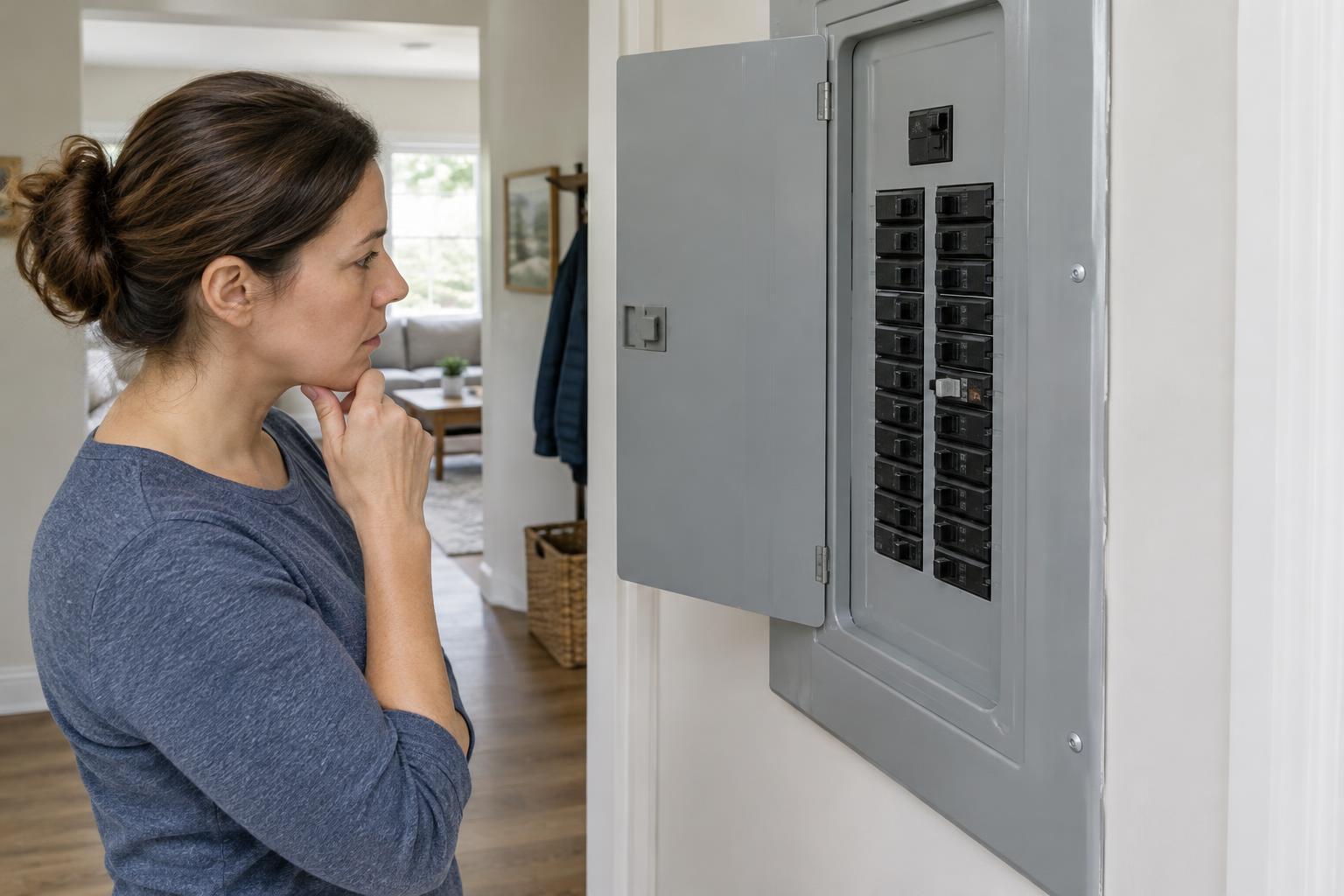
Start with the area that lost power
A circuit breaker is designed to shut off power when it detects a problem on a circuit. Sometimes the cause is straightforward: several power-hungry appliances were running at once. A trip can also point to a fault in an appliance, outlet, switch, or wiring. Treat it as information to investigate, not as a nuisance to override.
First, identify what stopped working. Is it one room, several outlets, or the whole home? If the whole home is without power, check whether neighboring homes or shared building areas are affected before assuming a breaker is responsible. If only certain outlets have lost power, a ground-fault circuit interrupter (GFCI) outlet may have tripped instead. Look for a nearby outlet with test and reset buttons, but do not use or reset one that is wet, damaged, hot, or discolored.
Before going to the electrical panel, note what was running just before the power went out. A space heater, kettle, hair dryer, or other high-demand appliance may be a useful clue. You do not need to diagnose the electrical system yourself; the goal is to gather enough information to respond safely.
Check for danger before touching the panel
Do not attempt a reset if you notice smoke, a burning smell, sparks, scorch marks, unusual buzzing, or a hot panel, outlet, cord, or appliance. Keep clear of the affected equipment. If there is a fire or immediate danger, leave the area and contact emergency services. Never use water on an electrical fire.
The panel area should be dry, accessible, and well lit. Do not touch the panel with wet hands or while standing in water. You can operate the labeled breaker switches, but do not remove the panel cover or reach behind it. If the panel is damaged, difficult to access safely, or unclear to you, stop and contact a qualified electrician or your building manager.
Try one cautious reset, if conditions are safe
If there are no warning signs, turn off and unplug devices on the affected circuit where you can do so safely. This reduces the load and helps you see whether an appliance may be involved. At the panel, a tripped breaker may sit between the ON and OFF positions, though its appearance varies. Read the panel labels, and avoid switching off unrelated circuits unless necessary for safety.
To reset the identified breaker, move its handle fully to OFF, then to ON. Use one hand and stand to the side of the panel if you can do so comfortably. If the breaker will not stay on, trips again immediately, or trips again after you restore a device, leave it off. Repeated resets are not a repair and can put you back in contact with a fault.
If power returns, reconnect devices gradually rather than all at once. If the trip appears linked to a particular appliance, stop using that appliance until it can be checked or replaced. Do not defeat a plug, use a damaged cord, or rely on an extension cord as a permanent way to move the load to another outlet.
Know when to call an electrician
Arrange for a qualified electrician if a breaker trips repeatedly, will not reset, or trips with most devices unplugged. The same applies if you cannot identify the affected circuit, outlets or switches behave unpredictably, lights flicker along with a trip, or you find heat, discoloration, buzzing, or a burning smell. A breaker serving a kitchen, bathroom, laundry area, or outdoor outlet deserves particular care because water and electrical equipment may be close together.
Avoid opening outlets, replacing a breaker, changing wiring, or installing a larger breaker to stop a trip. The breaker is matched to the circuit it protects; changing it without evaluating the circuit can create a serious hazard. If you rent, report repeated trips and any warning signs to the landlord or property manager promptly rather than arranging electrical work yourself without authorization.
When you call, describe which rooms or outlets lost power, what was in use, whether a reset held, and any sounds, smells, or visible damage. Those details help the electrician decide how urgently to respond and where to begin.
Reduce avoidable trips without ignoring new ones
For day-to-day use, spread high-demand appliances across appropriate outlets and avoid running several at once on the same circuit. Plug major appliances directly into suitable wall outlets rather than stacking adapters or power strips. Keep cords in good condition, and follow each appliance’s instructions for placement and use.
A single trip with a clear overload may not mean something is broken, but a new pattern is worth attention. Keep a brief record of what was running and which breaker tripped. That simple note can help distinguish a one-time inconvenience from a problem that needs professional inspection.


