Start by finding the point of trouble
Open and close the door slowly while watching the gap between its edges and the frame. Note whether it rubs at the top, along the latch side or near the floor. If the door closes but springs back open, watch where the latch meets the strike plate on the frame. A few careful observations will help you avoid adjusting a part that is working properly.
Check whether the problem is constant or comes and goes. Wood doors and frames can shift slightly as indoor humidity changes, while a door that has gradually begun to sag may have loose hinges. Look for scraped paint, a shiny wear mark or a corner that sits closer to the frame than the others. Before making changes, put a folded towel beneath the door to protect the floor and help support its weight.
Check the hinges before altering the door
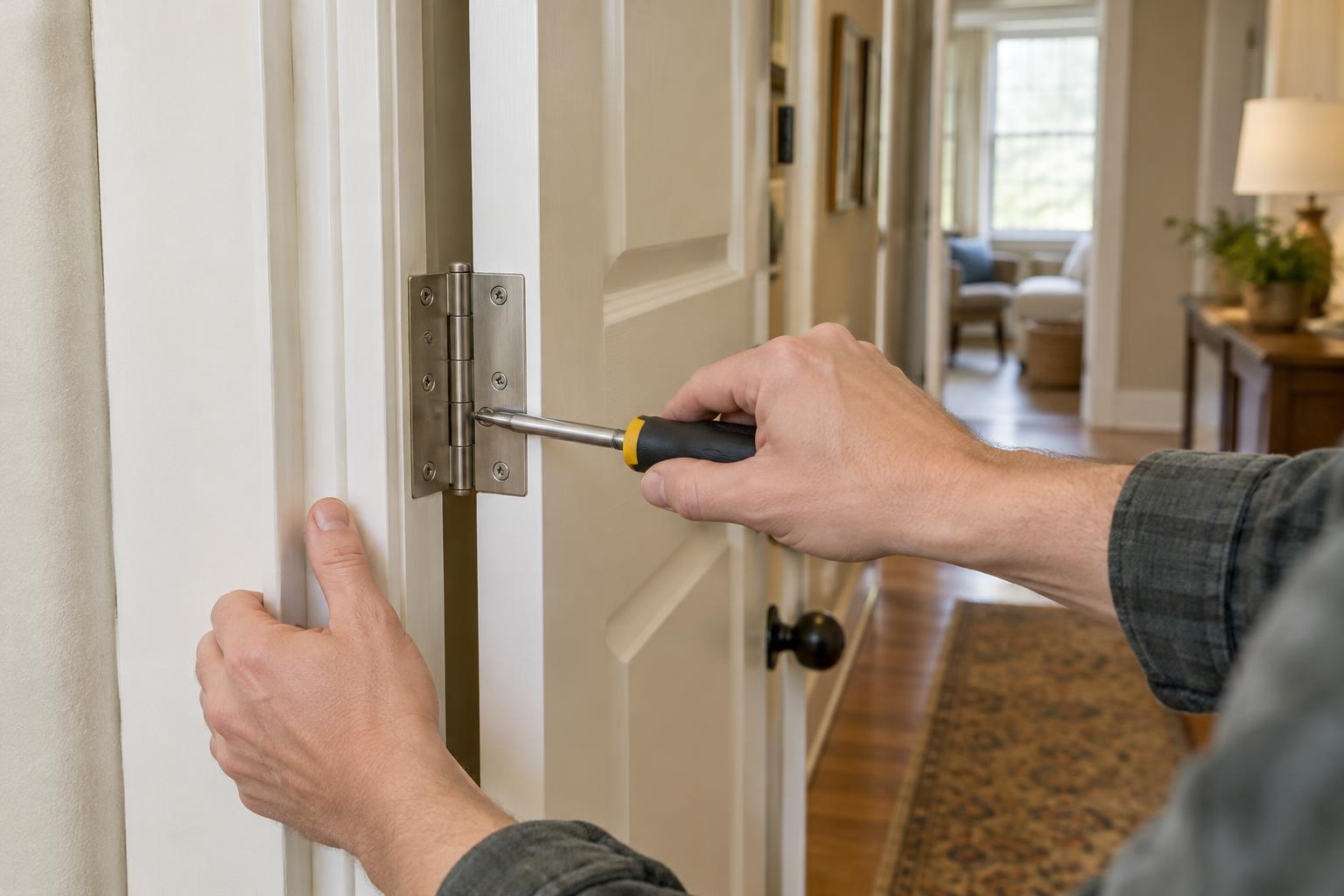
With the door open, hold its outer edge and gently lift it. If the door moves at a hinge or you can see a loose screw, tighten the screws by hand with a screwdriver that fits the heads. Avoid forcing them: a screw that turns without gripping may have a worn hole, and overtightening can make that worse. Test the door after each small adjustment rather than tightening everything at once.
A squeak often comes from movement at a hinge pin. Wipe visible dust from the hinge, then apply a small amount of lubricant intended for hinges at the moving joint. Work the door back and forth and wipe away any excess so it does not collect dirt or mark nearby finishes. If the hinge is bent, cracked or pulling away from the frame, replacing or repairing the hardware may be more useful than adding lubricant.
See whether the latch lines up
If the door swings freely but will not stay closed, examine the latch and the opening in the strike plate. Close the door slowly and note whether the latch sits above, below or to one side of that opening. Tighten any loose screws on the strike plate and hinges first; even a small shift can affect alignment. Also check that the latch moves in and out smoothly when you turn the handle.
Resist the urge to carve out the frame or move the strike plate immediately. If the door has dropped because a hinge is loose, changing the strike plate may hide the symptom without addressing the cause. If the latch still misses after the hardware is secure, a modest strike-plate adjustment may be appropriate, but renters should check what changes are permitted before making new holes.
Handle rubbing without rushing to trim
For a door that sticks, use the wear marks and the door’s movement to locate the tight spot. Check for a raised paint drip, loose weatherstripping on a door that has it, or debris caught near the threshold. Clean the area and retest. If rubbing seems related to damp conditions, improving ventilation and allowing the door to dry may be worth trying before removing material.
Sanding or planing is harder to undo than tightening a screw. Removing too much can leave an uneven gap, expose an unfinished edge or make the door look out of place when conditions change. If trimming is necessary, take the door’s finish and construction into account, work gradually and protect yourself from dust. For a rented home, ask the property manager rather than cutting or sanding a door.
Know when a small fix is not enough
A door that suddenly becomes difficult to close, develops a large uneven gap or changes shape noticeably deserves a closer look. The issue may involve the frame, flooring or surrounding wall rather than the door hardware. Avoid forcing a stuck door, especially if it is the only convenient way into a room. Seek help if the frame appears damaged, the door is unusually heavy or repeated adjustments do not hold.
Once the door operates well, keep it that way with occasional checks. Wipe dust from hinges and the latch, tighten screws that have begun to loosen and deal with drips or persistent moisture nearby. Open and close the door after each change so you can tell what helped. The goal is a door that moves easily, latches reliably and retains an even-looking gap without unnecessary alterations.