Start with the work you actually do
Craft supplies are easy to scatter because a single project can involve tools, materials, instructions and pieces that need to dry or stay flat. Before buying organizers, gather what you use from drawers, shelves and work surfaces. Sort it by activity rather than trying to make one system fit everything. Sewing, drawing and paper crafts, for example, may each need a different mix of containers and workspace.
Set aside supplies you reach for often, materials used only occasionally, and items that belong to a specific unfinished project. Check whether pens still work and whether scraps are large enough for a project you can imagine doing. You do not have to decide the fate of every offcut at once; giving scraps one limited container can make it easier to keep useful pieces without letting them take over.
Give each activity a portable home
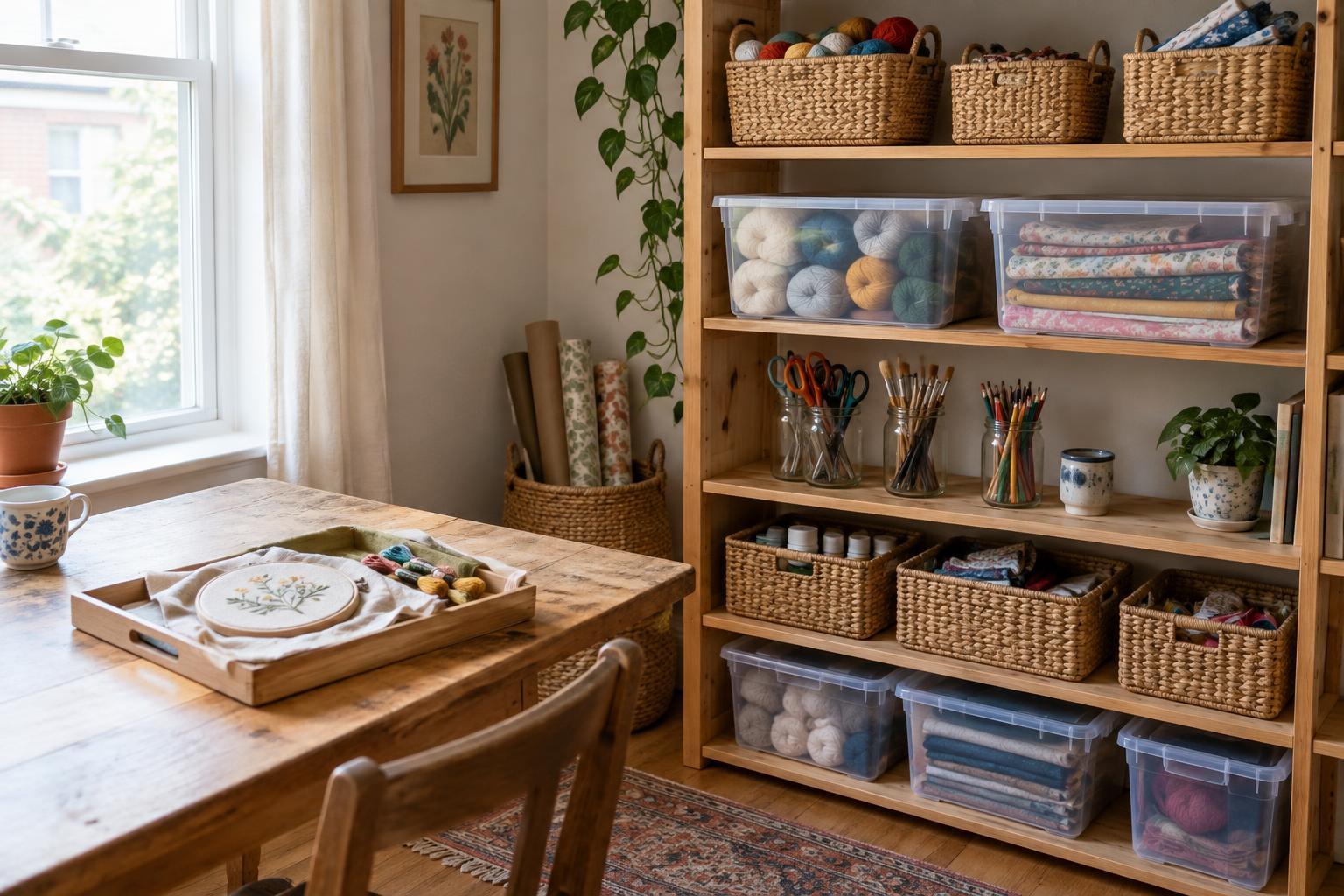
If you work at a dining table or another shared surface, a portable kit can be more useful than a permanent display. Put the basic tools for one activity in a handled box, shallow basket or drawer that can travel to the table and return to a shelf. Keep heavy or bulky materials nearby rather than forcing everything into one container. The goal is to make starting a project simple, not to create a kit so full that it is hard to carry or search.
Use dividers or small containers for things that tend to mingle, such as needles, clips, erasers and adhesive refills. Clear boxes can help you see contents, but opaque containers work just as well when labels are easy to read. Label by contents or activity, not by a vague category like “miscellaneous.” Before buying matching boxes, try the containers you already own and measure the shelf or cabinet where the finished kits will live.
Make unfinished projects easy to pause
An unfinished project needs a home of its own. A tray can hold a small project you will return to soon; a lidded box or folder can protect work that must wait longer. Keep the workpiece, its dedicated materials and a brief note together. A note such as “cut two more pieces” may be enough to spare you from reconstructing your next step later.
Choose a container that suits the project rather than folding or squeezing work to fit a tidy-looking box. Flat paper can go in a folder, while loose components may need a divided case. If glue or paint must dry, follow the product directions and use a suitable temporary surface before putting the project away. Limit how many active projects occupy your main work area; store paused ones on a designated shelf so the surface remains usable.
Place supplies by use and handle hazards thoughtfully
Keep frequently used kits at a comfortable height and reserve harder-to-reach spaces for occasional materials. Store heavier boxes low so you are not lifting them down from overhead. Small, sharp tools should have protective cases or secure compartments rather than lying loose among fabric or paper. If children share the space, keep blades, needles and other unsuitable supplies where they cannot access them.
Think about the conditions where materials will sit. A damp cabinet may not be a good home for paper, fabric or supplies with packaging that should stay dry. Keep products in their original containers when their labels include handling or storage directions. Separating delicate work from liquids and messy materials can also prevent an ordinary spill from undoing hours of effort.
Leave room for the system to work
A useful craft storage setup has space to put things back. Avoid packing every box to the rim, and leave a little room on the shelf for lifting containers out without moving a stack first. If several activities share one cabinet, group their kits together and give each group a clear spot. This creates a calmer view without requiring identical bins or a large budget.
After a few projects, notice what still ends up on the table. A tool left out repeatedly may need a more convenient home, while an untouched supply may not deserve prime space. Adjust one part of the setup at a time. The best arrangement is not the one that looks perfect when every box is closed; it is the one that lets you begin, pause and clean up without a long search.